This Meeting Could Have Been a Love Story
Office Romance have always been a hot topic of debate. From high-profile affairs to headline-making scandals, it seems that love in the office can lead to a wide range of outcomes. But is it always bad?
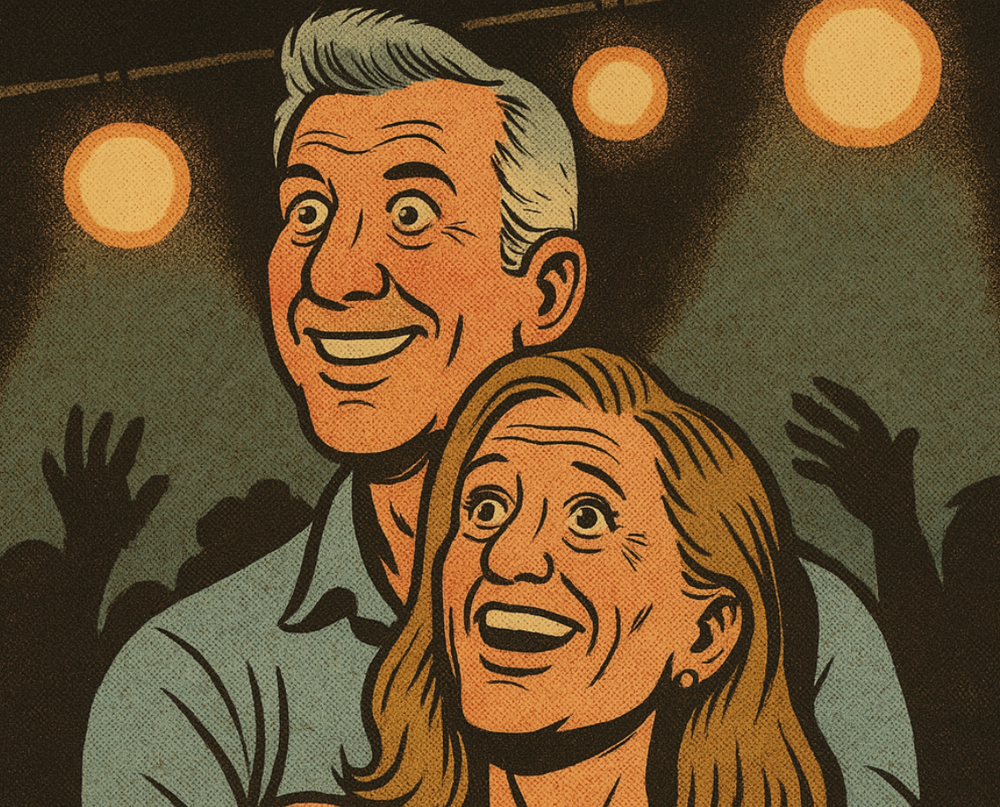
On one hand, cases like that of Astronomer’s Andy Byron and Kristin Cabot carry devastating consequences—not only for the individuals involved, but for the company itself. Careers are lost. Public trust erodes. And one can only imagine the irony buried in the very HR policies Kristin may have helped craft. The specter of future investigations looms, casting a long shadow over a brand now entangled in whispers.
But the collateral damage doesn’t stop at boardroom doors. Behind the headlines are fractured homes, custody battles, and the slow, agonizing unraveling of families—made all the more unbearable under the glare of a spotlight no one asked for.
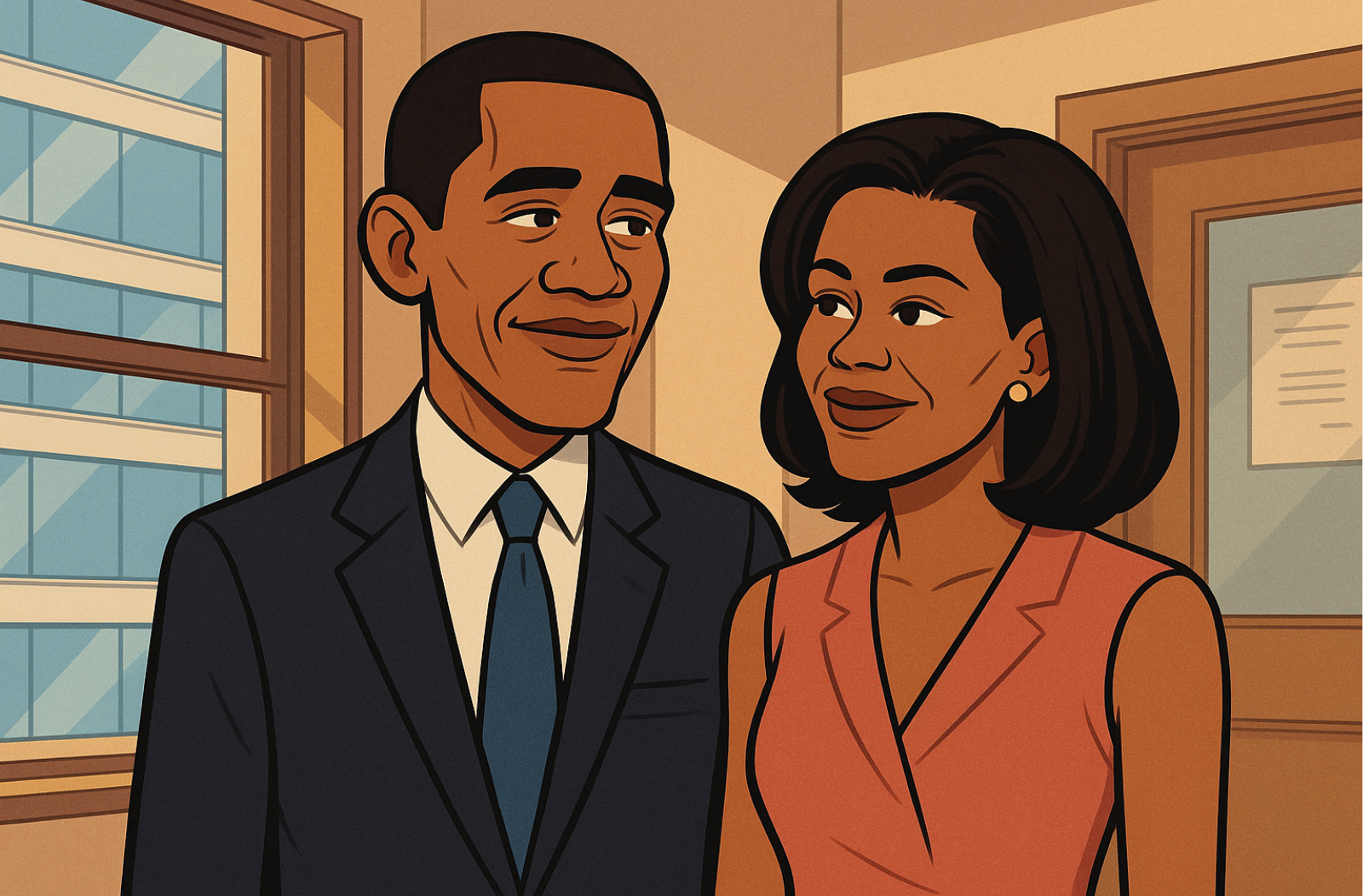
On the other hand, some of the world’s most admired partnerships were born across desks and during late-night strategy sessions. Bill and Melinda Gates began their journey at Microsoft, transforming a workplace connection into a philanthropic empire. Michelle and Barack Obama first met at a law firm in Chicago—he was the intern, she was the advisor—and the rest became presidential history.
To understand office romance is to understand the quiet psychology of proximity and pressure.
Single professionals—especially in industries that glorify ambition—often find themselves tethered to their desks long after hours.
With social lives eclipsed by Slack pings and calendar holds, the workplace becomes not just a source of income but a social ecosystem. Bonds form naturally: over shared frustrations, clever quips between meetings, and the subtle admiration of intellect across a boardroom table. In an age where efficiency reigns, where AI threatens job security and automation hastens isolation, these moments of connection can feel rare—almost sacred.
But romance doesn’t belong solely to the unattached. Even those with families can slip into the comforting fantasy of the “work wife” or “office husband”—giving HR’s tired mantra of “we’re a family here” a slightly more ironic twist. It's a low-stakes roleplay, dressed as camaraderie, that offers just enough novelty to feel exhilarating, yet safe from the complications of dating outside the nine-to-five. A fleeting escape from domestic duties, from the grind, from the unrelenting demands of modern adulthood. Harmless, they reassure themselves.
Until, of course, it isn’t.
And then there’s the allure of the forbidden. HR policies, with their stern language and zero-tolerance clauses, often serve less as deterrents and more as accelerants. In the beige monotony of cubicle life, the very act of resistance becomes intoxicating. What’s off-limits is suddenly the only thing that feels alive.

Office romance has also evolved with the times—reshaped, reframed, and scrutinized under the harsh light of the digital age. The rise of social media ensured that once-private entanglements now unravel publicly, often in real time. Stories that once circulated quietly around water coolers now echo across headlines, amplified by hashtags and comment threads. The #MeToo movement, a cultural reckoning long overdue, exposed how easily power and intimacy can collide in ways that are anything but romantic.
In its wake came the era of cancellation—a swift, unforgiving response to misconduct, perceived or proven. Corporations, scrambling to preserve reputations, responded with new HR doctrines and ethical codes, tightening the language around relationships in the workplace.
Executives and managers, meanwhile, have adapted in their own way. Some have developed risk-mitigation strategies that range from over-cautious avoidance to quiet backchannels and NDA-laced discretion. In a landscape where affection can spark liability, office romance has become less about chemistry and more about calculus: One-on-one meetings with female colleagues are declined. Business dinners get canceled. Mentorships dry up. Travel itineraries are suddenly gender-conscious.
At a glance, these tactics may appear cautious—even prudent. But beneath the surface lies a more insidious reality: women are being quietly edged out of the informal arenas where power is brokered and careers quietly advance. Sheryl Sandberg, former COO of Meta—who herself met her late husband, Dave Goldberg, through work—has been a sharp critic of this defensive posture. Avoiding women, she argues, isn’t protection. It’s discrimination—dressed in the polished veneer of professionalism.
“When men avoid one-on-one meetings with women,” she’s warned, “they exclude them from the very conversations that drive careers forward.” In a world where the upper rungs of leadership are still predominantly male, that avoidance doesn’t just stall progress—it cements inequality.
Sandberg is right, of course—excluding an entire gender from critical one-on-one meetings is not a solution.
It's a workaround masquerading as policy, and one that ultimately undermines the very ideals of equality it claims to protect. Yet to pretend the dilemma is simple would be equally naïve.
The truth is, no HR policy—no matter how well-intentioned—can fully mitigate the ambiguity that surrounds private interactions. When the door closes and the conversation becomes one-on-one, so too does the evidence. If an accusation arises, it becomes a matter of “he said, she said”—a dynamic that places enormous pressure on internal investigations, legal teams, and public relations alike.
Historically, in cases of intense personal conflict, the courts have often leaned toward believing the woman’s account—an instinct born of decades in which female voices were routinely dismissed. But the pendulum is shifting. The high-profile litigation between Johnny Depp and Amber Heard marked a cultural turning point, casting public doubt on once-settled narratives and illustrating just how murky the pursuit of truth can become when emotions, reputations, and careers are on the line.
In this landscape, companies aren’t just managing people—they’re managing optics, legacies, and risk exposure. And while exclusion isn’t the answer, neither is blind idealism.

What’s needed in today’s workplace is not less connection—but more integrity and transparency.
We cannot legislate human nature out of existence. Attraction is not a flaw—it’s a biological reality, one that can arise between colleagues regardless of gender, status, or intent. We shouldn’t be punished for feeling it. But we must be held accountable for what we do with it.
There is a vital distinction between genuine connection and coercion, between mutual affection and manipulation. Office relationships rooted in respect, honesty, and consent deserve the space to exist—while exploitation, harassment, or power-driven advances should be swiftly and unequivocally condemned.
The fallout from Andy Byron and Kristin Cabot’s relationship might never have reached nuclear levels had there been transparency from the start. Careers could have been spared, Pete DeJoy might not have been thrust into the spotlight as Astronomer’s interim CEO overnight—and Andy’s alleged OnlyFans transactions might have remained, well, nobody’s business.
It wasn’t the romance that set the fire. It was the secrecy—the quiet omissions, the blurred lines, the rewriting of policies in whispers—that turned a private entanglement into a public scandal. It is not immoral to fall in love—or even to have an affair. What corrodes trust is not desire, but deception. And in the corporate world, hypocrisy spreads faster than gossip in an open-plan office.
Many Fortune 500 companies have already embraced this nuance. Their relationship policies are flexible, permitting dating across departments so long as no direct conflict of interest exists. We applaud this approach. It acknowledges reality while still preserving accountability—a policy not driven by fear, but by maturity.
As we live through yet another revolution—this time, led by artificial intelligence—we're reminded that while our tools evolve at breakneck speed, our nature remains rooted in something far more ancient. Human instincts haven’t changed much since our tribal beginnings. What has changed is visibility. Social media has exposed integrity issues that once stayed comfortably hidden behind boardroom doors and corporate PR.
Social media—our modern-day, democratized surveillance—can play a pivotal role in surfacing the truth. But it comes with a trade-off: privacy. Not every facet of human interaction is meant to be recorded, dissected, or replayed—unless, of course, you’re into that sort of thing.
And as AI advances, the lines between fact and fiction grow increasingly blurred. What once seemed unthinkable can now be fabricated with uncanny realism, making it harder than ever to discern what actually happened behind closed doors… if anything happened at all.
In the end, the verdict on office romance isn’t ours to deliver. It belongs to you—the reader. You, who know that life is rarely black and white. That sometimes love blooms over spreadsheets and deadlines. And that, like us, you probably have a soft spot for spicy food, aged wine with a lingering finish, and cars that move just a touch too fast. These indulgences aren’t for everyone—but they do make the ride a little more thrilling.
So seize the day, however you like it. Just remember to buckle up. On the freeway—and in the conference room.