
The Many Lives of Karina Lamarr
From Brazilian soccer player to Silicon Valley chef, fashion icon, and aspiring tech entrepreneur—how one woman rewrote the rules of reinvention.
By Sunyung An for Sublime Avenue Magazine
The Interview
The lunch hour at a federal culinary school on Treasure Island finds most instructors grabbing a quick sandwich, scrolling through their phones. Not Karina LaMarr. She's giving an interview to Sunyung An, Sublime Avenue's senior editor, her voice warm and rapid-fire, punctuated by laughter that somehow manages to convey both resilience and lightness—the sound of someone who has survived enough plot twists for three lifetimes and emerged not just intact, but luminous.
"You know I'm a chef, right?" she asks, almost as an afterthought, before launching into a story that begins in Brazil, detours through Sicily, gains momentum at Leeds University on a soccer scholarship, acquires polish at the Ritz Carlton culinary school in Lausanne, and eventually lands in San Francisco—a city whose fog-draped hills she fell in love with the moment she arrived to visit her mother.
It's the kind of peripatetic biography that sounds almost too cinematic to be true, except that LaMarr delivers it with the matter-of-fact cadence of someone recounting a grocery list. For her, reinvention isn't a choice—it's simply how one navigates life.
Growing Up Among Brothers
At 18, she was the only girl among five brothers, playing soccer with them, learning to hold her own on a Brazilian pitch where mercy was not part of the game. "I was extremely overprotected," she recalls. "I could never have a boyfriend. I couldn't go out with my friends." When her period arrived at 16, she had no one to talk to—her mother perpetually traveling, her father and brothers well-meaning but utterly unequipped for the conversation.
I was raised by male and not just one, a lot of them.

England, with its gray skies and Leeds University, represented escape. "I need to go and find myself. I need to go and find who I am."
But escape came with its own challenges. Brazil is "very beauty driven," LaMarr explains, a place where conformity to aesthetic ideals determines social standing. "I never felt like I fit in. Never."
Finding Identity Through Food
England offered soccer and a bachelor's degree in nutrition, but the cultural whiplash was severe. "They're very cold," she says of the British, contrasting their reserve with the three-kiss greetings of her Mediterranean upbringing. Food became her bridge—cooking Brazilian feijoada and Italian sauces for classmates who had never tasted anything beyond bangers and mash. "It was almost like a restaurant," she remembers. "People were looking forward to come to my place."
Her father, a chef himself though never formally trained, suggested culinary school. Two years at the Ritz Carlton in Switzerland followed, then immigration to San Francisco, where her mother had carved out a new life. The city's light—so different from England's perpetual cloud cover—seduced her immediately. She became an executive chef at an Italian restaurant, then confronted the grinding reality of kitchen life: the 3 a.m. finishes, the relentless adrenaline, the holidays spent working while everyone else celebrated.

"Being in a restaurant going home at 3:00 in the morning is not my thing," she admits. More troubling was watching Americans "not eating well," seeing kitchen staff who needed training. Her solution was characteristically ambitious: she obtained California teaching credentials and began instructing young chefs in farm-to-table cuisine, in the art of making food that nourishes rather than merely fills.
Loss and Rebirth
But life had other lessons in store. Her first husband, a Scotsman, died when she was very young—she doesn't linger on the details, but the weight of it colors her voice. Her second marriage, to the father of her son, "was pretty tough." Then came the moment that would pivot her trajectory once again: walking by the water in Ocean Beach, two days postpartum, she encountered a photographer who would become her gateway into fashion.

"He goes, 'Are you a babysitter?'" she laughs. "I said, 'Thank you. I just gave birth about two days ago.'" The photographer—"one of the biggest in the fashion industry in New York"—gave her his card. Initially dismissive, thinking he was "just hitting on me or whatever," LaMarr eventually reached out when her marriage turned harsh.
I need to somehow find a way to feel better, because I was feeling like shit.
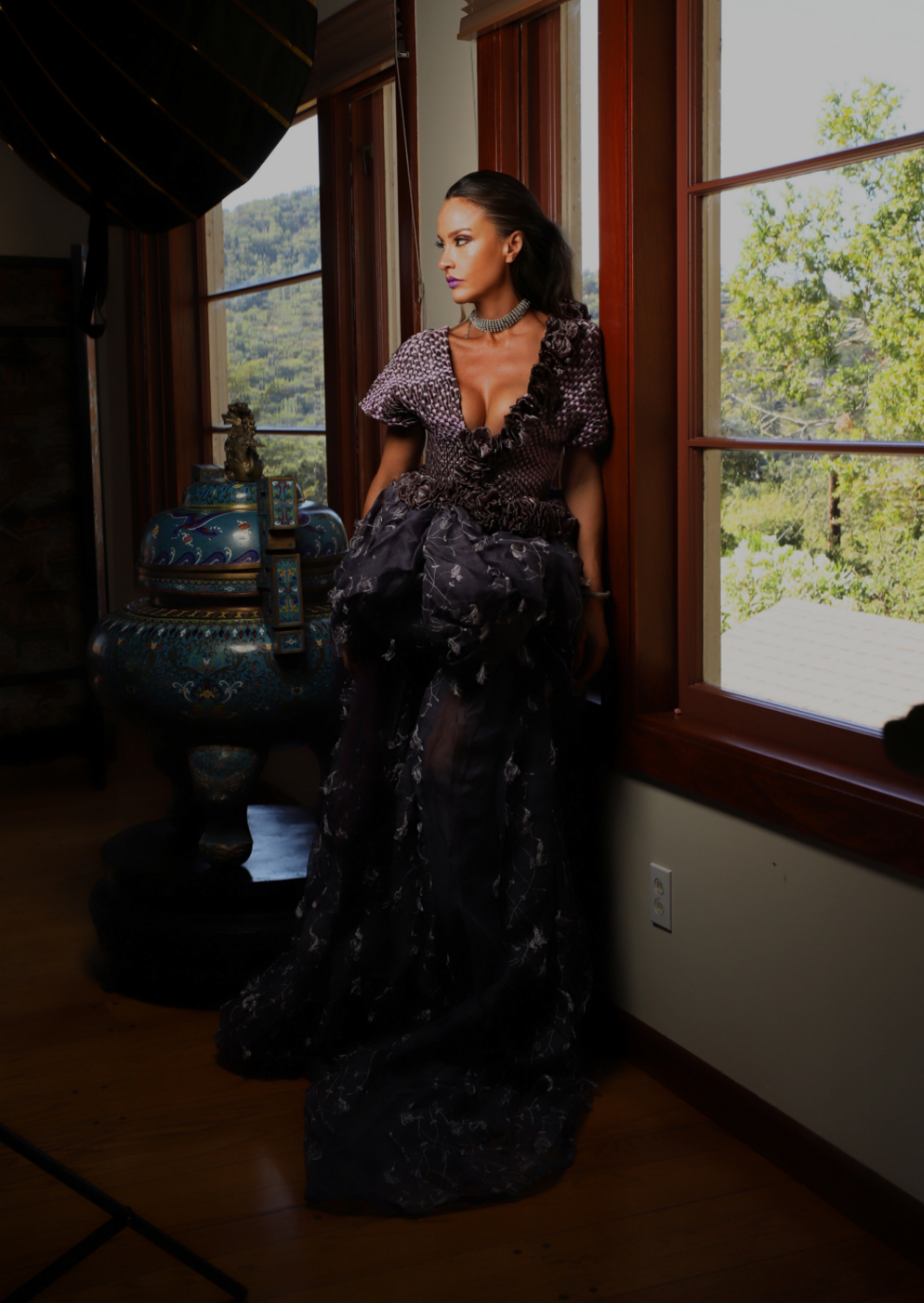
Modeling empowered me. It made me strong enough to take care of my child by myself.
The Language of Fashion
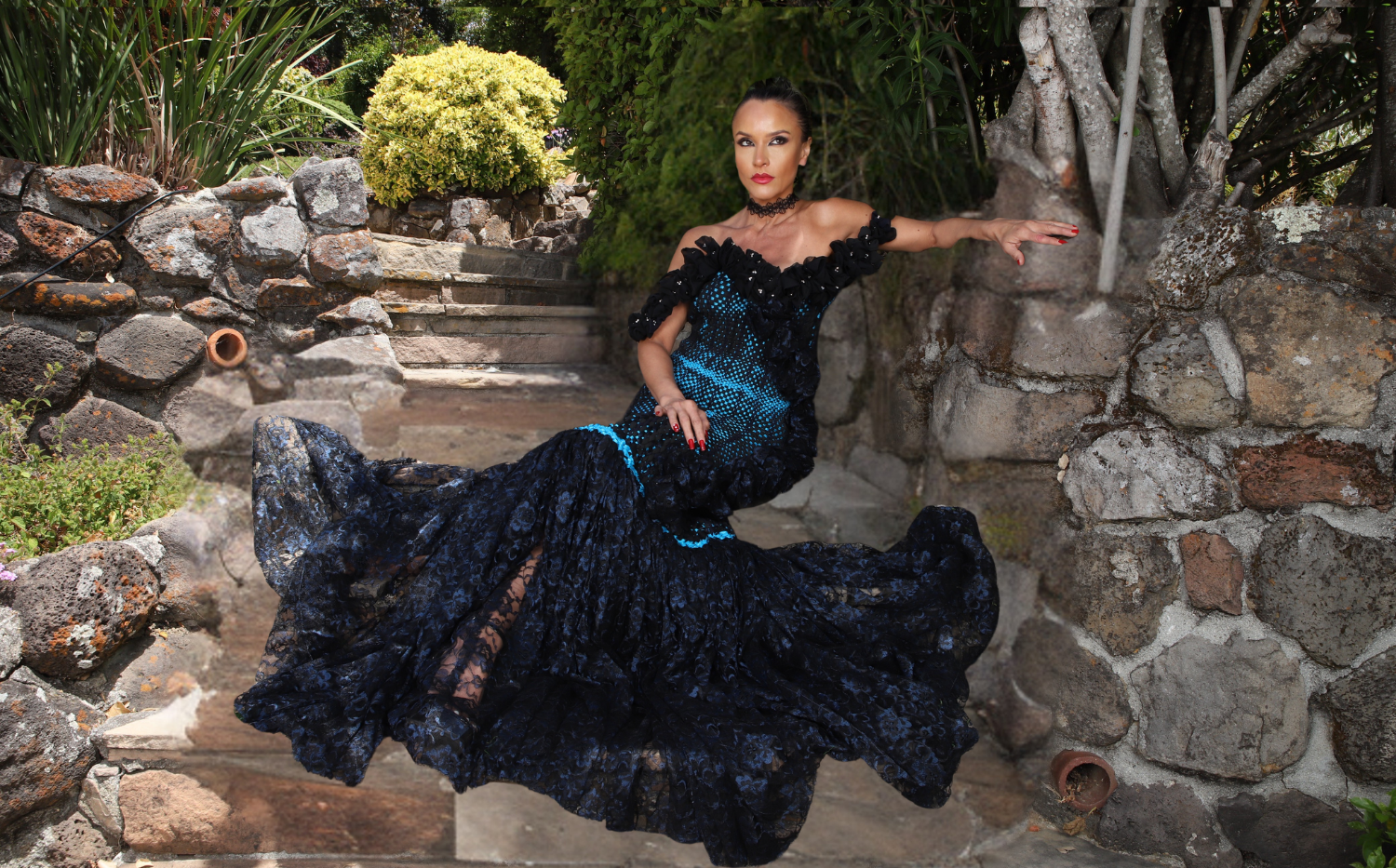
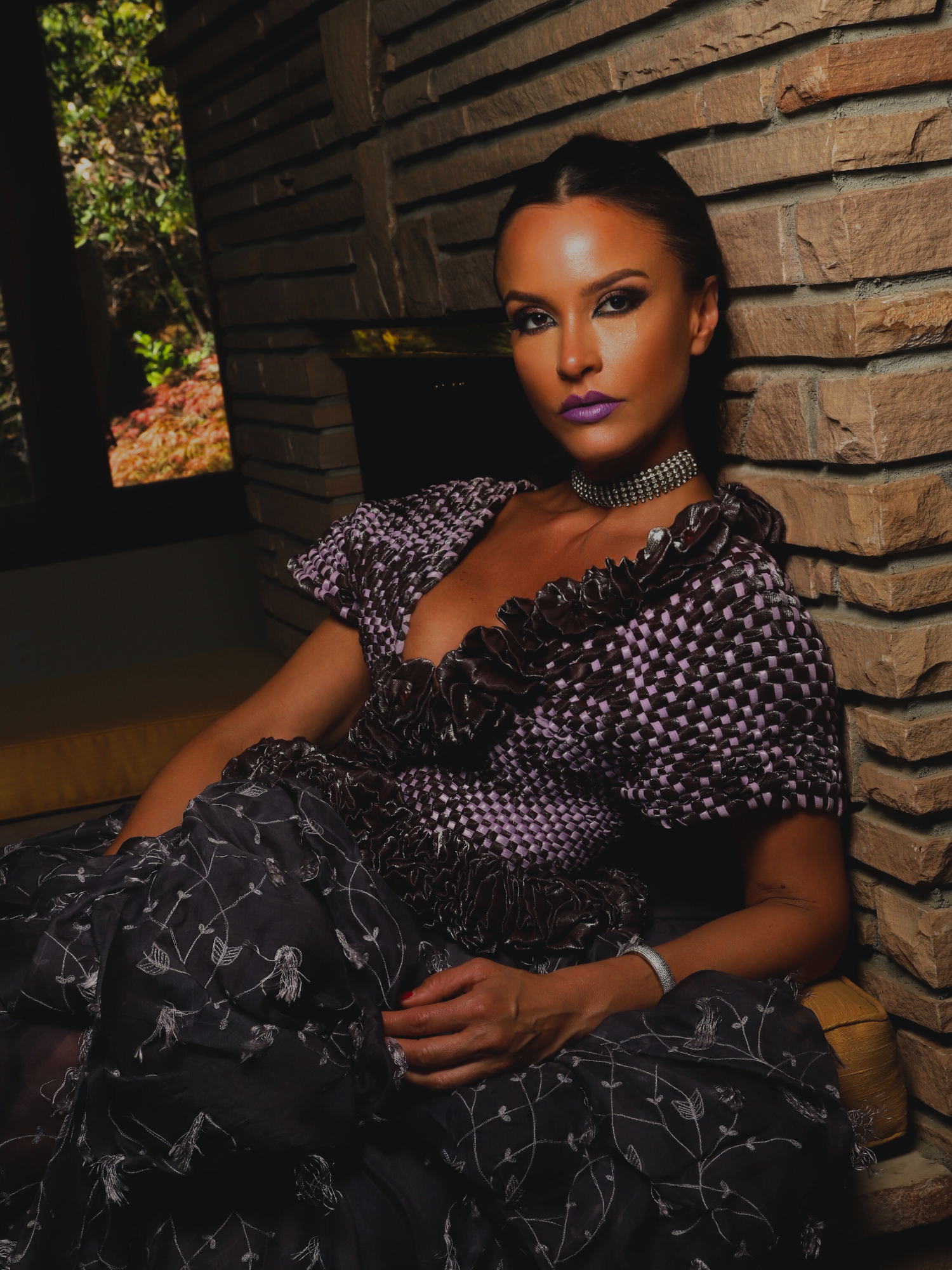
The editorial submission that caught Sublime Avenue Magazine's attention tells a story through five dresses by designer Tuan Tron, each representing a stage in a woman's romantic journey: single (black), dating (blue), engaged (red), married (white), divorced (purple). LaMarr gravitates to the red—"when you flourish basically with your relationship and the engagement moment"—and acknowledges discomfort with the bookends of solitude and sadness. But she wears them all with the same conviction, understanding that fashion, like life, requires inhabiting the full emotional spectrum.
The Next Chapter
Somewhere between the kitchen and the runway, LaMarr found time to learn Python and Java, to earn a cybersecurity degree from UC Berkeley, and to explore penetration testing. She speaks five languages. She's working on an online nutrition course teaching people to eat according to their blood type—"You can change your name, you can change your sex, you can change your hair... you cannot change your blood." Her book, published this October, includes a chapter on detoxing after the COVID vaccine, a topic she approaches with the zeal of someone who lost a brother to complications from it.
Now, she's launching a cybersecurity startup, transitioning "little by little" from the culinary world while keeping one foot firmly planted in her nutritional mission.
"I'm always wanting more. I'm always wanting to learn and know more," she says, acknowledging that retirement might come in the next decade—though knowing her track record, retirement likely means yet another reinvention.
Love Above and Beyond
Her mother, now in her eighties, married an American from San Francisco at 60 after meeting him on a seniors' cruise. They've moved to a Brazilian island, living the life "we should all of us live at the end towards the end of the life." LaMarr's voice breaks slightly when she talks about her:
It's this love—fierce, sprawling, unapologetic—that animates everything LaMarr does. From teaching 24 students per class how to master international cuisine to building her tech venture, from coaching clients through her Fit Food for Life company to strutting down Sacramento Fashion Week in recycled telephone wire dresses, she moves through the world with the energy of someone who learned early that survival requires constant motion, constant adaptation.

She showed us love. Love above and beyond.
There's no bravado in it, just acknowledgment of a fact she's proven repeatedly. When asked about her favorite designer—if she could wear only one for the rest of her life—she doesn't hesitate: "Valentino." For books: "Yasuke," about the first Black African samurai in Japan. For movies: "Casablanca," watched "anytime." Her last husband? "The angry one" of the seven dwarves, though they're finally "in a good place" after twelve years.
The Disney princess she identifies with most? "Pocahontas." Of course. The woman who bridged worlds, who refused to be confined by anyone's expectations, who chose her own path even when it meant leaving everything familiar behind.
Connection as Sustenance
LaMarr's phone number is public—she's "everywhere" on social media, especially in the culinary industry. "I don't mind if people call me," she says, because after everything—the deaths, the divorces, the cultural dislocations, the relentless self-creation—what she understands better than most is that connection is what sustains us. That and good food, a strong sense of self, and the willingness to keep reinventing when one life no longer fits.
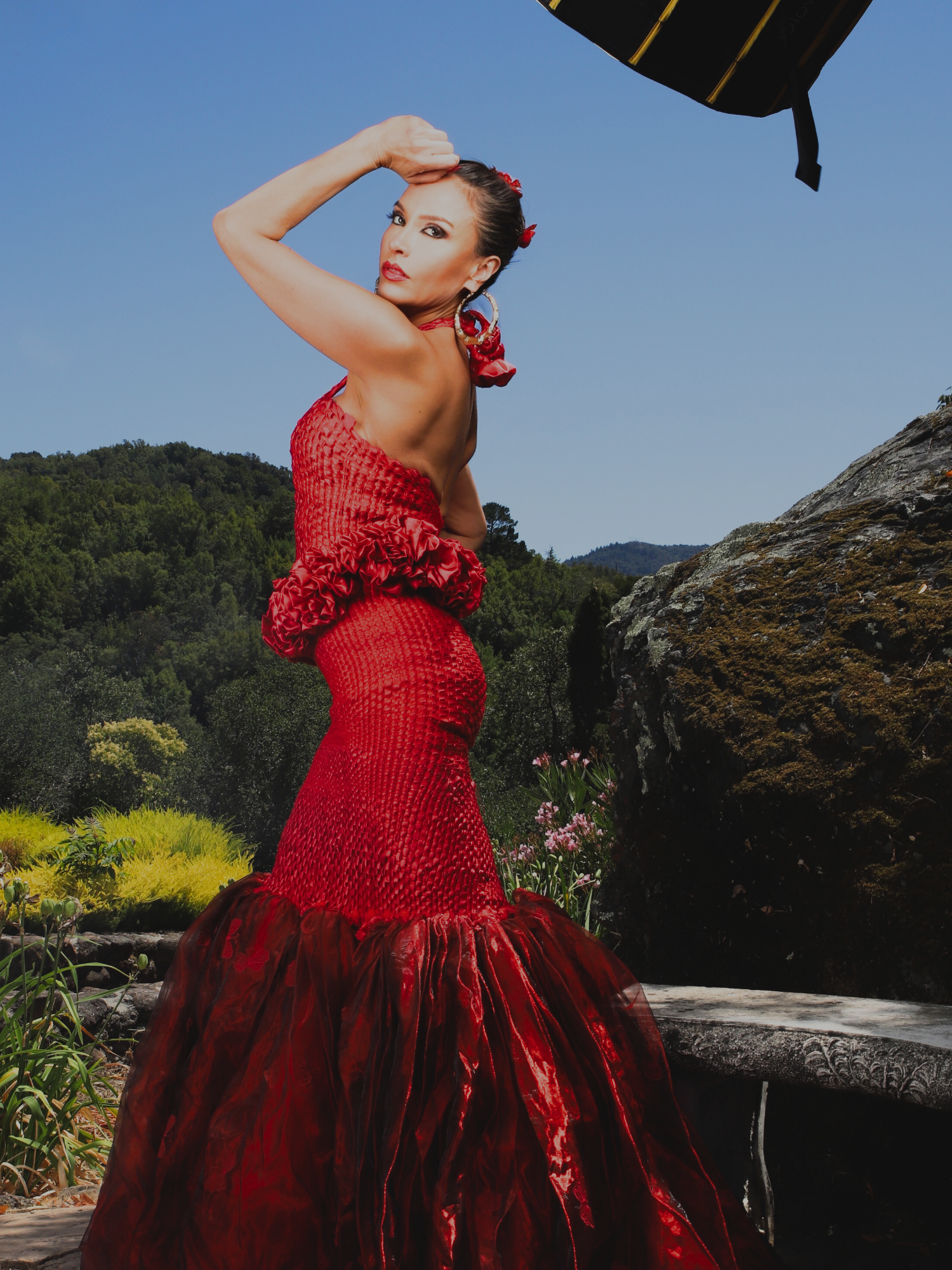
As an immigrant, I truly believe that we can make it better than anybody else.
She has ten minutes left of her lunch break when An wraps up the conversation. Enough time, perhaps, to grab something quick before the afternoon classes begin, before the next group of culinary students arrives to learn not just technique, but resilience—though they may not realize that's the real lesson until years later, when they're navigating their own plot twists and remembering the Brazilian-Italian-British-Swiss-American woman who taught them that a good sauce can change everything, that boundaries are made to be crossed, and that reinvention, done right, is the most nourishing recipe of all.