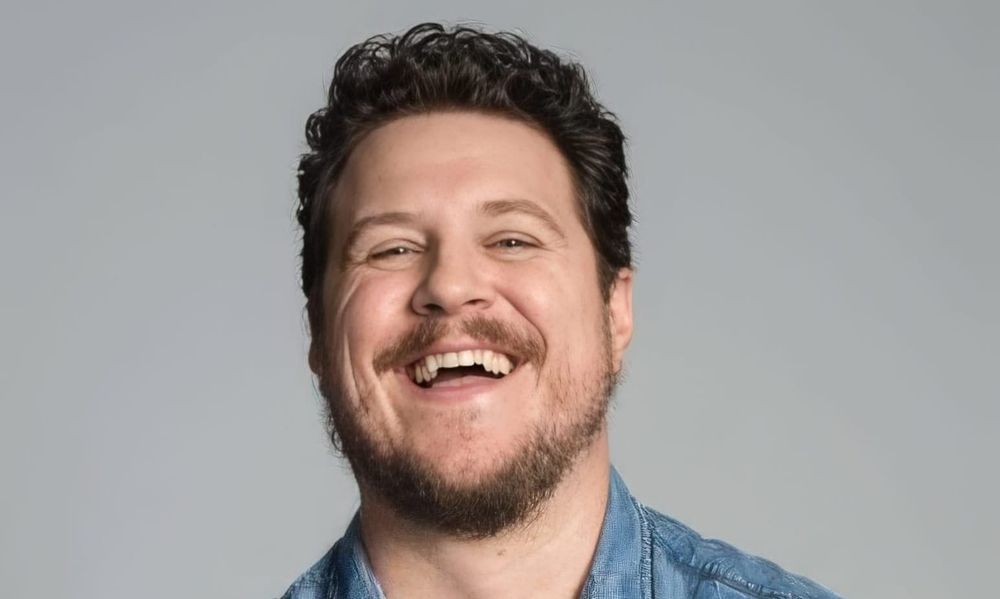
The Gentle Giant: Cameron Britton’s Radical Approach to Acting in an Age of Anxiety
The Emmy-nominated actor who once slept in his car has discovered something Hollywood keeps forgetting: joy might be the most subversive act of all.
By Ava Reid for Sublime Avenue Magazine
There's a particular species of actor who treats their craft like a form of controlled suffering—method devotees who disappear into darkness, emerging months later with stories of psychological torment and artistic martyrdom. Cameron Britton tried that once. It nearly destroyed him.
I've only ever come from joy. For a few years I was unnecessarily full of pain and anxieties and doubts, and my work was suffering for sure.
"I thought after Mindhunter, everything I had done to prepare for that had been right," the 38-year-old actor tells me, his frame filling the screen with an ease that belies the intensity of what he's describing. "I suddenly had success and I freaked out. I was thinking about Joaquin Phoenix or Christian Bale or Marlon Brando—there's this image in your head that they're the most intense, serious person at all times on set, full of pain." He pauses, and something like relief crosses his face. "I've only ever come from joy. For a few years I was unnecessarily full of pain and anxieties and doubts, and my work was suffering for sure."
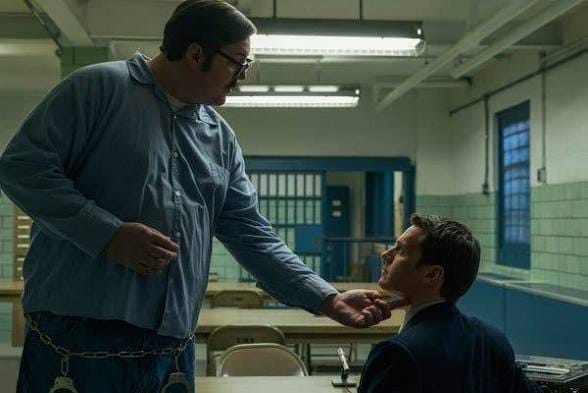
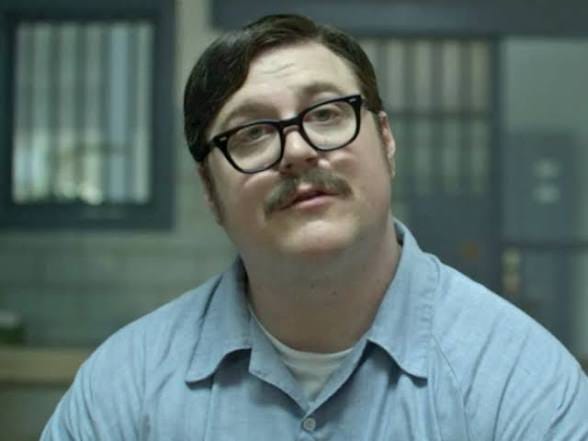
It's a confession that lands differently in 2026, when the entertainment industry has spent years romanticizing artistic anguish. Britton—who earned an Emmy nomination for his chilling portrayal of serial killer Ed Kemper in David Fincher's Mindhunter, and charmed audiences as the time-traveling assassin Hazel in The Umbrella Academy—is quietly staging a revolution of one. His radical thesis? That the best art comes not from suffering, but from its opposite.
The Ramen Noodle Years
Before Cameron Britton was being fitted for designer suits at Netflix's expense, he was sleeping in his car in a preschool parking lot in Los Angeles, a bottle of wine and a rotisserie chicken his evening companions. Before he was nominated for an Emmy, he spent eight years teaching special needs children, ages 18 months to three years old. Before he worked with Tom Hanks, Nicolas Cage, Jude Law, and Andrew Garfield, he was doing community theater with friends, sleeping at the theater when he could.
"I lived in my car in LA," he says matter-of-factly. " I was a preschool teacher, so I'd sleep in the preschool's parking lot with their say-so. I was 26. I'd grab a bottle of wine and a rotisserie chicken from the store, just hanging out with my friends doing theater." There's no bitterness in the recollection, no sense of having paid dues. "I was happy. I was finally found happiness as a preschool teacher and I loved my life."
This is the first thing you need to understand about Britton: he entered the acting profession already whole. When success came—suddenly, dramatically, with Fincher's imprimatur—it wasn't the culmination of a desperate hunger. It was, in his own words, "Man, what the hell happened?"
The Fincher Effect
The story of how Britton landed Mindhunter has the quality of industry legend. Six auditions over six weeks. Eleven-page scenes. David Fincher showing up to a guest star's costume fittings to instruct Britton to sleep in his jeans "because a prisoner would only have two pairs at most." Rehearsals that cost $90,000 an hour. The golden era of television, when they just gave you all the money.
"I thought I was going to get fired the whole time," Britton admits. But Fincher saw something. In that first callback, handed an 11-page scene, Britton didn't try to memorize it. "I just came in and read it," he recalls. "They said, 'We need you to come back and be off book.' So we did that. Then they said, 'Now speed it up, that's Fincher pace.' Then he said he liked what I was doing with the slower pace. We did it again."
He said great actors need to be instinctual and fluid like a cat. He quoted John Lennon: 'Life is what happens when you're busy making plans.
The role that emerged—Kemper as an almost-likable monster, a 6'9" boa constrictor hypnotizing his prey—required Britton to go places most actors never visit. He drove around neighborhoods in character. Went to dog parks as a predator. Bought a car as the Co-Ed Killer. At the grocery store, he'd practice thinking about horrific acts while discussing the weather, discovering with unsettling frequency that people wanted to talk about "weird shit."
"I kept running into weird Uber drivers or people at the dog park who wanted to talk about dark things," he remembers. "I'd let it go that direction. 'Yeah, I beat my dog.' 'Oh, you gotta beat 'em hard.' I'm Kemper right now, like 'Oh yeah, you better hit him.'" He kept his fingernails very short—blood getting stuck under there, you understand.
But here's where Britton's journey diverges from the tortured-artist narrative: "It was mostly joy. Nine months, so there were times I needed the ice cream and the Beatles, but it was mostly joy." His girlfriend could tell when Kemper was still with him. Sometimes they couldn't be intimate. "I'd go to the kitchen and hold the counter." But the darkness was a tool, not an identity.
The Wilderness Years
Success should have been the beginning. Instead, it nearly ended everything.
Post-Mindhunter, Britton did what many actors do: he reverse-engineered his triumph, convinced himself he understood the formula. "I thought, 'I was fearless,'" he says, his voice edged with self-mockery. "No, you weren't. Just be honest with how it happened." He moved to Sonoma County with his son, to cow pastures and farming country. The work dried up. COVID hit. Then the strikes. "I felt no connection to art at all. I was just a dad, doing dishes, taking my kid to school."
When auditions came—rare, all self-tapes—he didn't even get callbacks. "I realized I was going to need to get a day job or teach acting. I used to teach and I missed it." He started calling around Bay Area acting schools, looking for teaching positions.
That's when he met Nancy Berwid, founder of First Take Acting. "Somehow an hour later I ended up joining her class instead of being the teacher," Britton laughs. "It wasn't like, 'Oh, this is what I needed.' It was more like, 'I don't know what else to do. I might as well go back to school.'"
It takes a particular kind of courage to return to student status when you've been Emmy-nominated. To sit in a room with other actors, recording your work, watching it back. To hear that what you think is playing isn't playing. That your face is "wooden"—a word Berwid is too diplomatic to confirm she used, but Britton won't let her off the hook. "You didn't, but you could have," he says warmly.
"I have mad respect for you," Berwid tells him in their conversation. "It's a vulnerable place to put yourself."
The Anti-Method
What Britton learned at First Take was, essentially, how to unlearn. The pre-planning that theater had taught him, the control that gave him security—all of it had to go. "My goal became to put this up, just read it, have a general idea of the scene, but bring myself and get out of myself," he explains. "That eventually bled into auditions. Recently I've been too busy and I've booked callbacks without knowing the lines. I'm just reading them."
I've booked callbacks without knowing the lines. I'm just reading them. It looks like I'm looking at the person, but I'm reading the script.
It sounds like heresy in an industry obsessed with preparation. But Britton had learned from the best. On Mindhunter, Fincher had taken him aside during lunch to talk about what great actors need to do. "He said they need to be instinctual and fluid like a cat." Fincher quoted John Lennon: "Life is what happens when you're busy making plans."
"He described a moment in Fight Club where he pulled an actor aside and showed them playback of when they'd gone up on their lines and were kind of improvising," Britton recalls. "He said, 'That's the most interesting thing you've done today. Because you don't know what's happening next.'"
The philosophy crystallized further on the set of A Man Called Otto. Watching Tom Hanks drop in and out of character between takes—telling Saturday Night Live stories, then instantly present when they called action—Britton saw what mastery actually looked like. "He should be telling this story, they say action, he's there. They say cut, he finishes his story." The same with Brendan Gleeson on Spider-Noir: an instinct for constructing scenes on the fly that seemed almost supernatural. "They're not asking permission. They're just letting you know, 'This is where this takes me.' The crew rushes to clear the space because they know."
"It reminded me not to ask for permission," Britton reflects. "We're here to serve the director and their vision. Sometimes they don't know it until you show them."
The Nicolas Cage Masterclass
When Britton had to choose between two offers last fall—an unprecedented position for any actor—he picked Spider-Noir for one reason: Nicolas Cage. "He's irreplaceable from when I was a teenager," Britton explains. "Every day I was either watching one of his movies or another. Then Adaptation came out when I was in early high school. You're seeing this action star who's also getting nominated for Academy Awards."
On day one of shooting, Britton asked Cage if he was nervous. "He said, 'Always day one. I better be or I'm not doing my job.'" But what struck Britton most was Cage's relationship with cinema itself. "If you start talking about film, there are certain people who get this weird buzz, this excitement. I always find someone on set who has it—usually a sound engineer or key grip. In this case, it was an actor who's fought alongside his uncle Francis Ford Coppola for five decades."
Cage would tell Britton to watch films, then discuss them between takes. "His buzz just buzzes," Britton marvels. "To see how childlike these actors who've been doing this since the seventies and eighties are about this stuff—it's pretty cool."
The Philosophy of Enough
There's a moment in the interview where Berwid mentions First Take's core principle: "You are enough." It's the kind of self-help platitude that usually makes artists roll their eyes. But in Britton's hands, it becomes something more radical.
They call Jesse Plemons. If he says no, they call Paul Walter Hauser. If he says no, they call me. I've had that call multiple times.
"I'm part of a very small niche casting world," he says. "Overweight, tall, gentle men. There's not many of us. They call Jesse Plemons. If he says no, they call Paul Walter Hauser. If he says no, they call me. I've had that call multiple times." He's been on set and asked directors, "Did you offer this to Plemons or Paul?" The answer is usually diplomatic. "They say, 'We thought about it. We felt you were the guy.'"
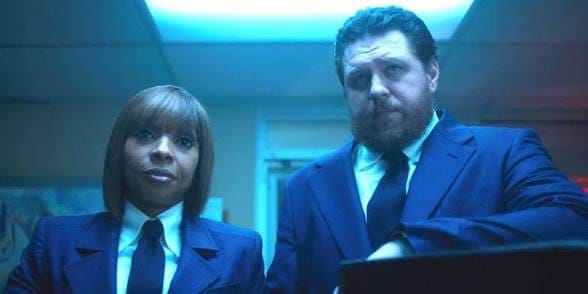
But here's the thing: Britton doesn't take it as a defect. "I've met actors who come up to me—same build, guys I love—and they're like, 'I'm competing with you for everything we do.' I didn't even realize we were competing." He pauses. "We're going to get told no so much more than yes. That's just part of this. Just keep doing what you do because you like doing it."
This is not the attitude of someone clawing for survival. When Britton talks about his "ramen noodle phase," it's without the chip-on-shoulder resentment that usually accompanies such stories. "Even with Mindhunter, we were still ramen noodling. We were in this cockroach apartment on Crenshaw and Adams. Netflix was putting me in suits worth more than my rent. We'd go to these fancy parties and come back to our cockroaches." He laughs. "It was culture shock."
"I still kind of live that way," he adds. "I live in a motorhome by choice. I have a couple pairs of shoes. I don't ever want to leave my ramen noodle phase."
The Joy Imperative
If there's a unifying theory to Britton's approach, it's this: joy is not the reward for doing good work. It's the prerequisite.
If I were unhappy and working, I would trade that for happy and not working. I was happy as a preschool teacher. I loved my life.
"If I were unhappy and working, I would trade that for happy and not working," he says simply. "I was happy as a preschool teacher. I loved my life. So I entered this saying, 'Okay, I'm not going to work often, I'm not going to care about the money.' Then I failed at sticking to it and I got very miserable for a while."
The trap of success—thinking you've figured out the formula, that you can manufacture the magic—nearly cost him everything. "There are so many interviews with my favorite actors where they think each project will be the last one," Britton observes. "They think John Hollywood's going to knock on their door and say, 'We're done. No more movies for you.' It never goes away. I think that adds to the level of joy. Hey, we got this one. We're doing this one."
He quotes Marcus Aurelius, the philosopher-king: "Choose not to feel harmed and you won't feel harmed. Don't feel harmed and you haven't been." On rejection, on the brutality of auditions, on the precariousness of the profession, Britton has arrived at a position of almost Zen detachment. "I just thought, you audition a hundred times, maybe you book one. This is a numbers game." He grins. "Hopefully with our clothes on."
The Tiger and the Truth
There's a moment in the interview that captures everything about Britton's evolution as an artist. While filming Wild Things—the Apple TV+ limited series about Siegfried & Roy—he had a scene where his character meets a tiger. "There's no barrier between us," he explains. "There's an actual actor they hired to play this tiger, and he's brilliant."
Britton felt what he hoped to feel: chills, adrenaline, fear, thrill, majesty. The scene worked. "We were all happy with it." Then, a month later, the animal wrangler invited the cast to her zoo—a real sanctuary where the animals actually enjoy their lives. They fed tigers through a cage, held baby bottles while massive cats drank milk.
I've never met a tiger before, but what I felt when I pretended to meet a tiger was what it felt like when I met a tiger after.
"What was crazy is I felt what I felt on the day," Britton says, wonder in his voice. "Usually you do your prep and then you do the scene and you hope to feel some of that prep. But it was the opposite. I did the scene, then I did the research. I've never met a tiger before, but what I felt when I pretended to meet a tiger was what it felt like when I met a tiger after."
It's a perfect encapsulation of his anti-method method. The imagination, fully committed to, creates the truth. "That's our whole process," Berwid interjects. "Making the circumstance really vivid even though there's no tiger there. You were able to do that and have it be all in your body, not 'How should I behave meeting a tiger?'"
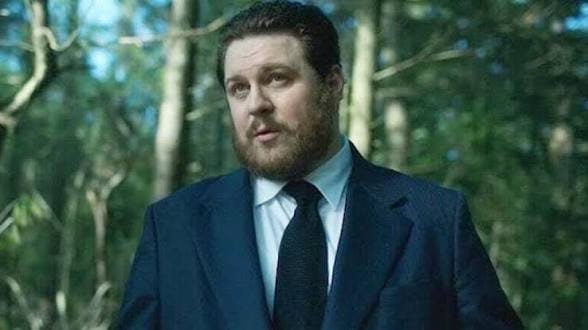
The Unmade Thing
When I ask Britton about roles he's turned down, he mentions Being Human—a film by Sian Heder, who won an Oscar for CODA. Same offer time as Spider-Noir, impossible scheduling. "The best script I've ever read," he says with genuine regret. "Incredible. Amazing. So touching and funny. A true story about folks with disabilities in the seventies trying to get equal rights."
They needed him five days over three months. "They couldn't make it work." There's no bitterness in this—just the reality of a profession where timing is everything and nobody controls the calendar.
"I've had a handful of years now where I haven't met any assholes on set, really," Britton reflects. "People come with their stuff, but everybody's just humble and grateful and supportive of one another. It seems like that's the best place to be for yourself. But it also can lead to great stuff for your career. I think the competitive, jealous stuff probably doesn't feel good, but some folks think that's how they get somewhere. I haven't seen it."
The Pre-school Teacher's Wisdom
Perhaps it's no accident that Britton's most desired role is playing an autistic character. "I worked with autistic children for eight years," he explains. "I have a lot to say." There's a passion here that goes beyond the actor's hunger for a showcase. "I think whenever—maybe I'm on the spectrum, maybe I'm not, who cares?—I think we're getting tight right now about actors playing things they aren't. A straight actor playing a gay person. I think we all get closer, our collective empathy gets closer, when we see people represent others that they aren't. We're saying, 'If they can get into someone else's shoes, can't I as well?'"
We all get closer, our collective empathy gets closer, when we see people represent others that they aren't.
It's the preschool teacher talking—the man who spent nearly a decade with children who experience the world differently, who understand that empathy is not about sameness but about imagination. "That's the whole thing of acting," he says.
Coda: The Cartilaginous Moment
There's one last story from Mindhunter that Britton shares, and it's perfect. Five minutes into an 11-minute scene, in character as Ed Kemper, he was supposed to grab Jonathan Groff's neck and say something about what it's like to have sex with someone's throat. Fincher had given him a specific word to use: "cartilaginous."
"I'd never heard the word before," Britton laughs. "I knew cartilage, but it wasn't sticking." Take after take, five minutes in, fully in the moment as one of history's most notorious serial killers, Britton would grasp Groff's neck and say, "Feel that? It's cardboard-gelatinous. Wait, sorry." They'd have to start over.

It's the only story Britton tells where his perfectionism shows, where the craft momentarily defeated the joy. Even Fincher, with his legendary demand for endless takes, must have found it absurd: an Emmy-caliber performance derailed by a pronunciation.
But that's the paradox of acting, isn't it? You spend years learning to be present, to get out of your head, to just be—and then someone asks you to grab another person's throat and use a word you've never said out loud while pretending to be a serial killer in a prison that closed decades ago, and somehow make it all feel inevitable.
Cameron Britton figured it out. He always does. He just refuses to suffer for it anymore.
Wild Things is expected to premiere on Apple TV+ in 2026. Spider-Noir is set to debut in 2026 on MGM+ and Amazon Prime Video.