Tanhaji: The Unsung Warrior
A Bollywood Epic Reimagined as High-Octane Spectacle
At a charitable evening that blurred the lines between fashion show and theatrical tour de force, the legend of Tanhaji Malusare was reborn in sequins, steel, and death-defying acrobatics.
There's a particular alchemy that happens when you take a 17th-century warrior's tale, filter it through Bollywood's maximalist sensibility, and stage it as a charitable fashion event. The result, as evidenced by this extraordinary production presented by Catwalk for Charitable Causes and Monizue Zhang, was something that transcended mere costume parade—it was history as high-wire act, literally.
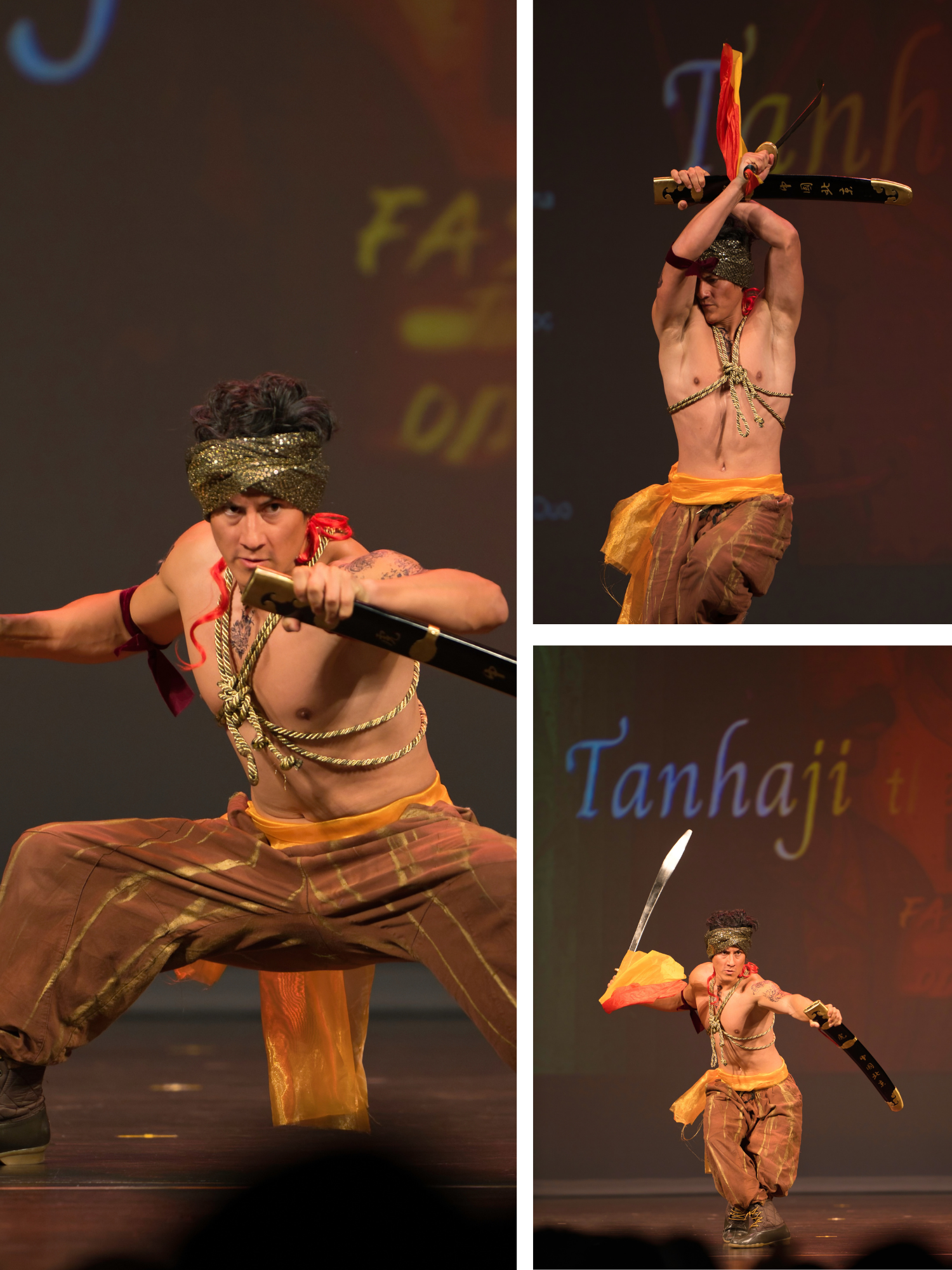
The evening opened with a performer whose physique suggested equal parts classical training and contemporary gym culture, his torso adorned with ropes of gold chains in a cross-hatch pattern that caught the stage lights like armor. Wielding dual swords with a flag attached in gradient shades of saffron and crimson, he embodied Tanaji himself—the Maratha warrior whose nocturnal siege of Kondhana fort in 1670 became the stuff of legend. The golden turban, encrusted with enough glitter to be visible from the cheap seats, nodded to period authenticity while winking at theatrical excess.
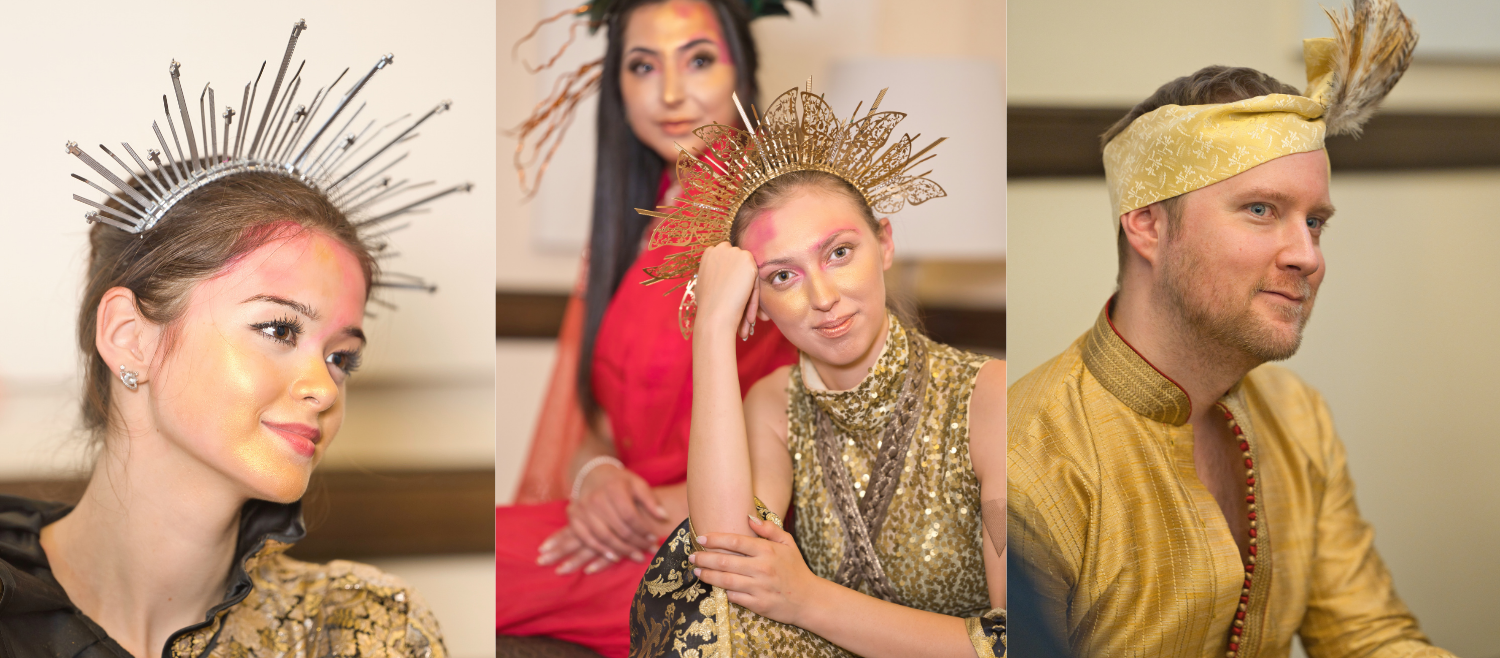
Backstage: The Alchemy of Transition
Of course, what the audience sees from their seats is only the final equation. Backstage, in the fluorescent-lit reality of dressing rooms, an entirely different kind of performance was unfolding—one that involved precision brushes, industrial-strength bobby pins, and the kind of patience that separates amateur theatrics from genuine artistry.
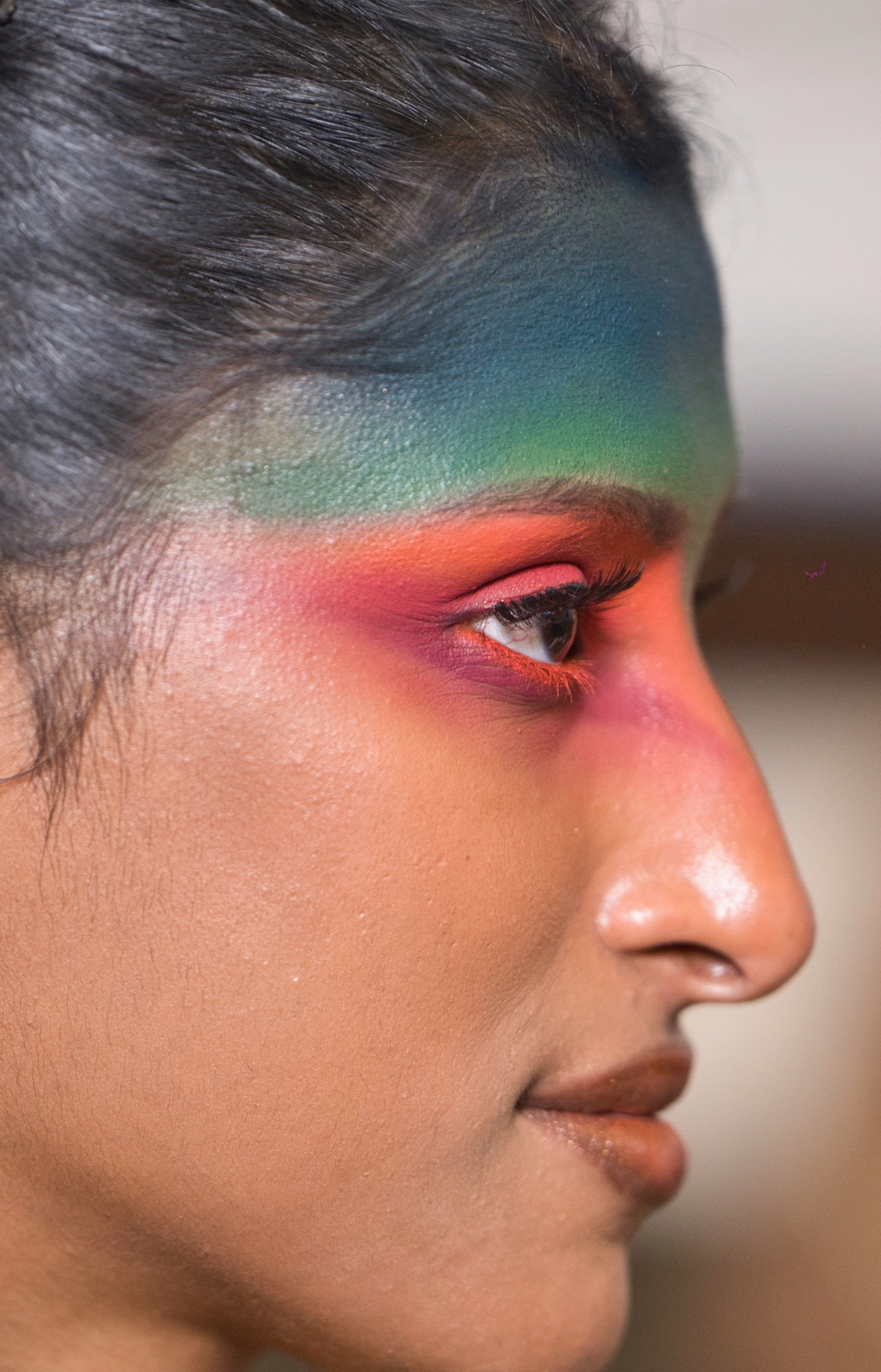
The makeup alone deserves its own monograph. One performer's face became a canvas for what can only be described as sunset rendered in cosmetics: a gradient wash that began with deep teal at the temples, dissolved into jade green across the orbital bone, then ignited into coral and hot pink before settling into a peachy glow at the cheekbones.
This wasn't makeup designed to look natural under stage lights—this was makeup as billboard, as declaration, as war paint for a cultural battlefield where tradition and modernity were still negotiating terms.
The headpieces, too, revealed their constructed nature in these intimate pre-show moments. That metallic sunburst crown—the one that looked so effortlessly divine under the spotlights—required the coordinated efforts of multiple hands to secure. In one revealing image, two stylists work in concert to position the radiating silver spokes, their fingers moving with the practiced efficiency of pit crew technicians. The performer sits bare-chested and stoic, red ribbons already draped around his neck (a telling detail: even the preparatory elements are color-coordinated), a bird tattoo visible on his shoulder—a small rupture of the personal into the pageant.
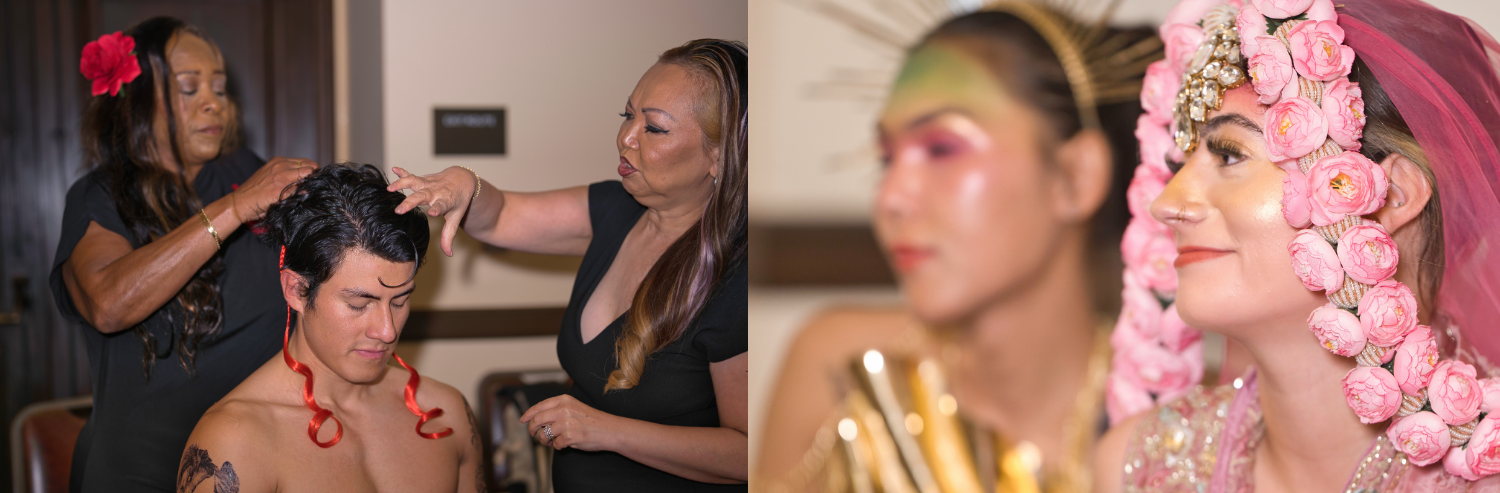
Then there's the floral crown that transformed one performer into something between Mughal miniature and haute couture fantasy: dozens of pale pink roses, each no larger than a quarter, wired into an elaborate frame that wrapped from forehead to nape. Up close, you could see the individual petals, the glint of crystal accents nestled among the blooms, the engineering required to make something so delicate withstand the rigors of performance. Paired with a dusty rose veil and a sequined ensemble that caught light like fish scales, the effect was less historical recreation than fever dream of empire—Bollywood by way of Alexander McQueen's more romantic impulses.
What these backstage glimpses reveal is the fundamental truth of all theatrical magic: it's labor-intensive, collaborative, and requires an almost monastic attention to detail that audiences will never fully appreciate. Each gradient of eyeshadow was blended by hand. Each headpiece was pinned with surgical precision. Each costume had been steamed, fitted, adjusted, and fretted over by people whose names won't appear in marquee lights, but whose artistry made the spectacle possible.
The Spectacle Unleashed
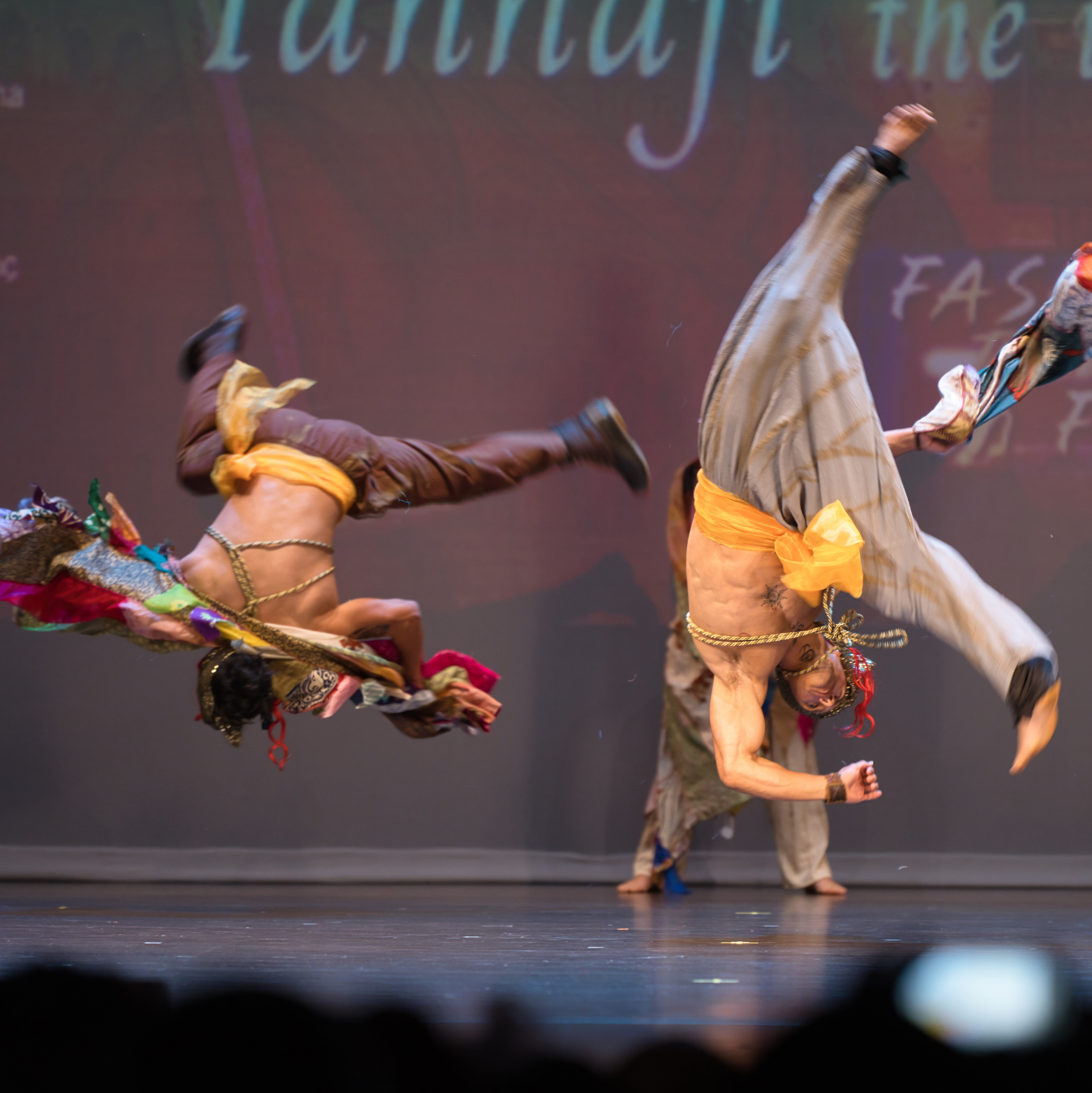
But it was the acrobatics that elevated this from dutiful historical recreation to something genuinely breathtaking. Mid-performance, bodies became projectiles. One particularly arresting moment captured a warrior suspended in full backbend, horizontal to the stage, sword and flag extended as gravity seemed negotiable. Another showed what can only be described as synchronized aerial combat—two performers launching into mirrored flips, their costumes a blur of earth tones and metallic accents against the stage lights.
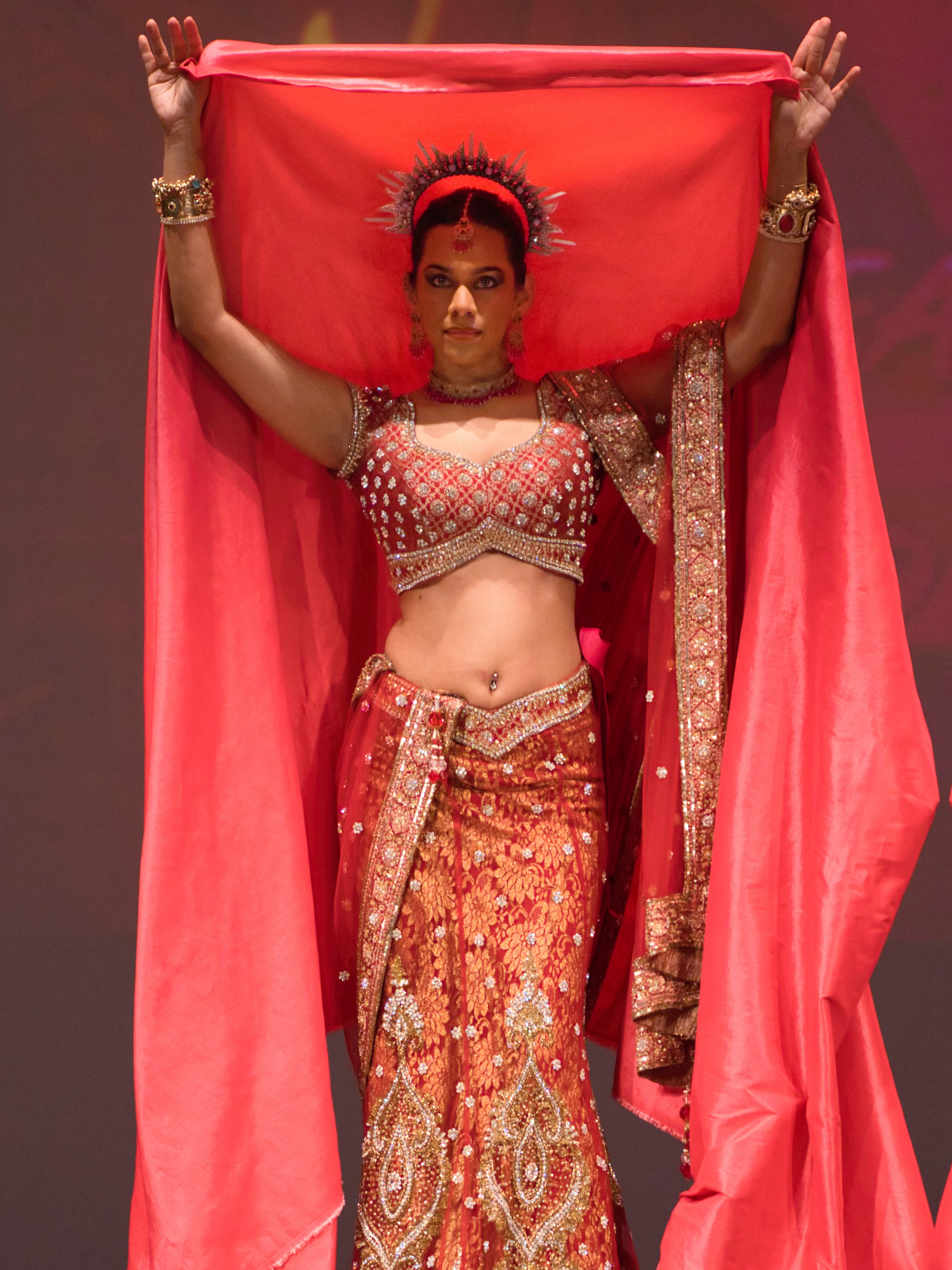
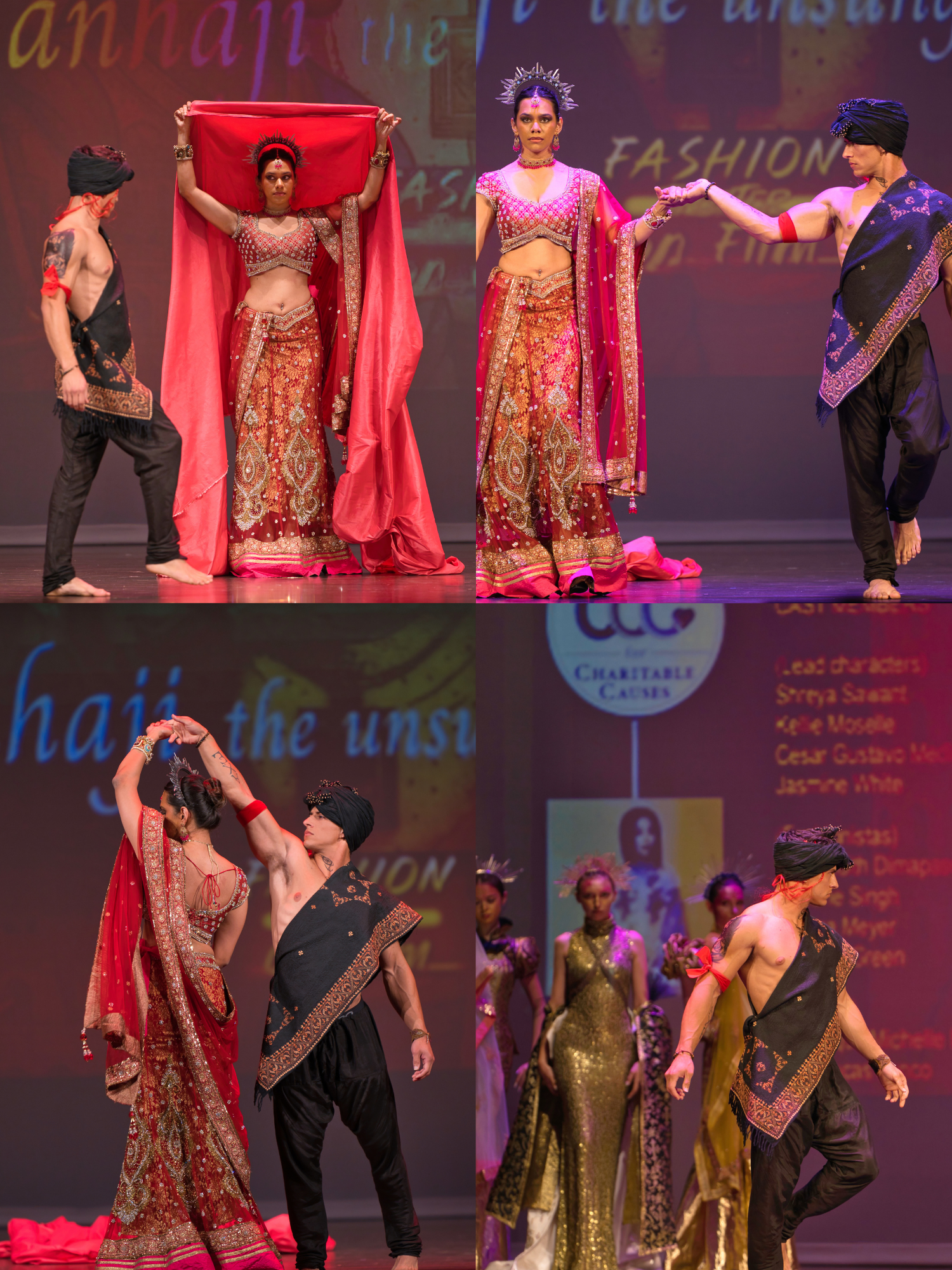
The romantic interlude provided necessary ballast to all that martial energy. Enter the female lead in a lehenga that could only be described as architectural—layers of red silk heavy with gold and crystal embroidery, topped with a crown that radiated spikes like a sunburst. The costume design here deserves particular note: while the male performers wore variations on harem pants and minimal torso covering (the better to display their athleticism), the women were draped in textile opulence that managed to be both historically evocative and utterly contemporary in its craftsmanship.
The staging of their courtship dance struck that particular South Asian sweet spot between restraint and passion—hands barely touching, gazes locked, the red silk of her dupatta becoming a visual metaphor for the passion constrained by duty. It's the kind of scene that Bollywood has perfected over decades: chaste yet charged, the promise of violence and romance intertwined.
Then came the fashion show proper, and here's where things got deliciously meta. Models processed in elaborate period costumes while holding decorative parasols—one in metallic gold lamé, another in what appeared to be hand-painted silk. The fusion of runway walks with historical pageant created an uncanny valley effect: were we watching a fashion show about a movie about history, or had we achieved some kind of cultural recursion?
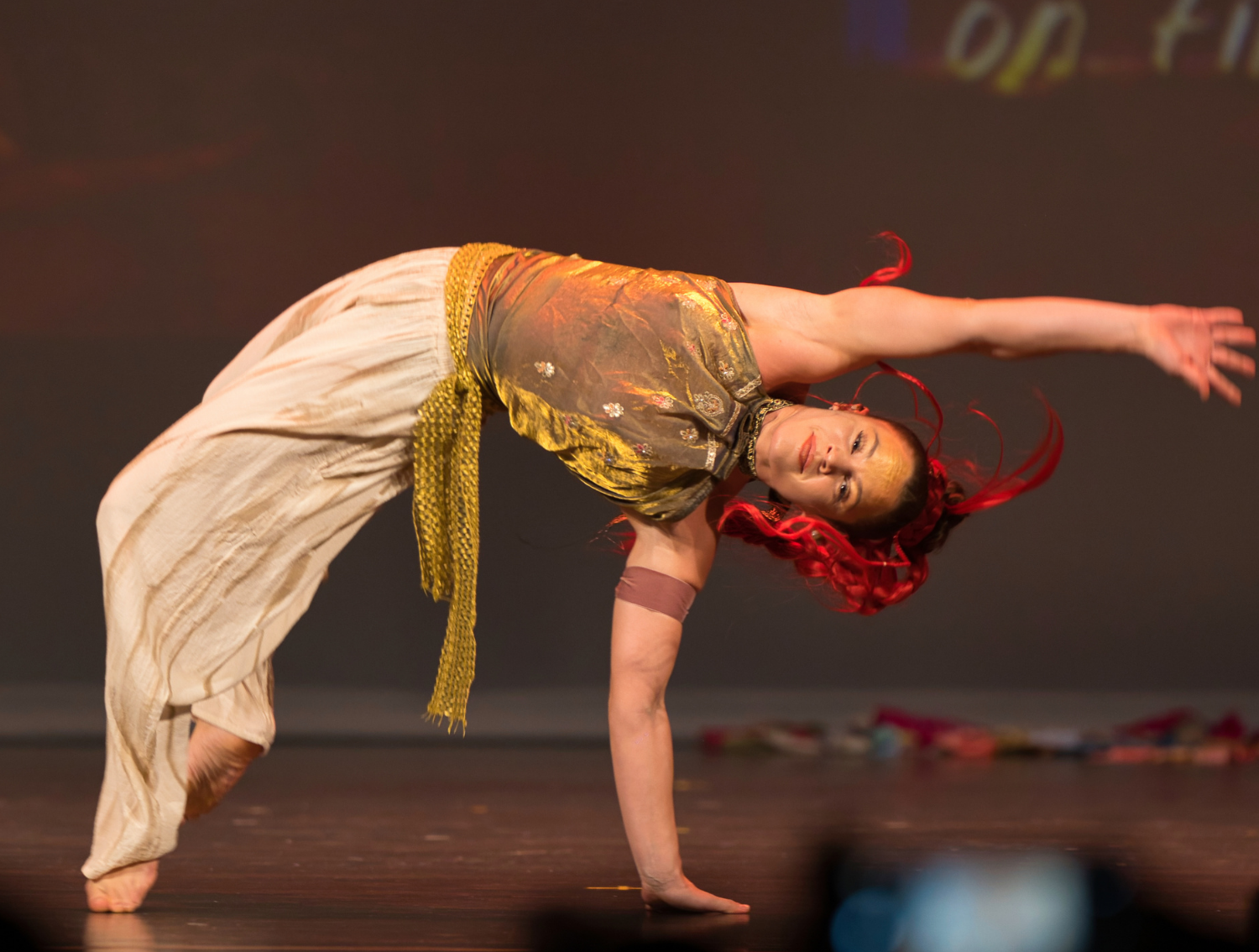
Younger performers brought a contemporary edge to the proceedings, their interpretation of warrior culture filtered through what looked like martial arts training meets modern dance. One lithe figure in cream-colored flowing pants and a metallic bodice executed a backbend so extreme it seemed to defy skeletal structure, red ribbons streaming from her headdress like calligraphic flourishes in space.
The climactic battle sequences eschewed any pretense of historical accuracy for pure kinetic joy. Two warriors faced off in matching golden turbans and earth-toned dhoti pants, their combat choreography borrowing equally from Kalaripayattu and street dance. In one frame-worthy moment, two bodies were captured mid-rotation—one upside-down, one right-side-up—creating a kind of human yin-yang symbol against the stage backdrop.
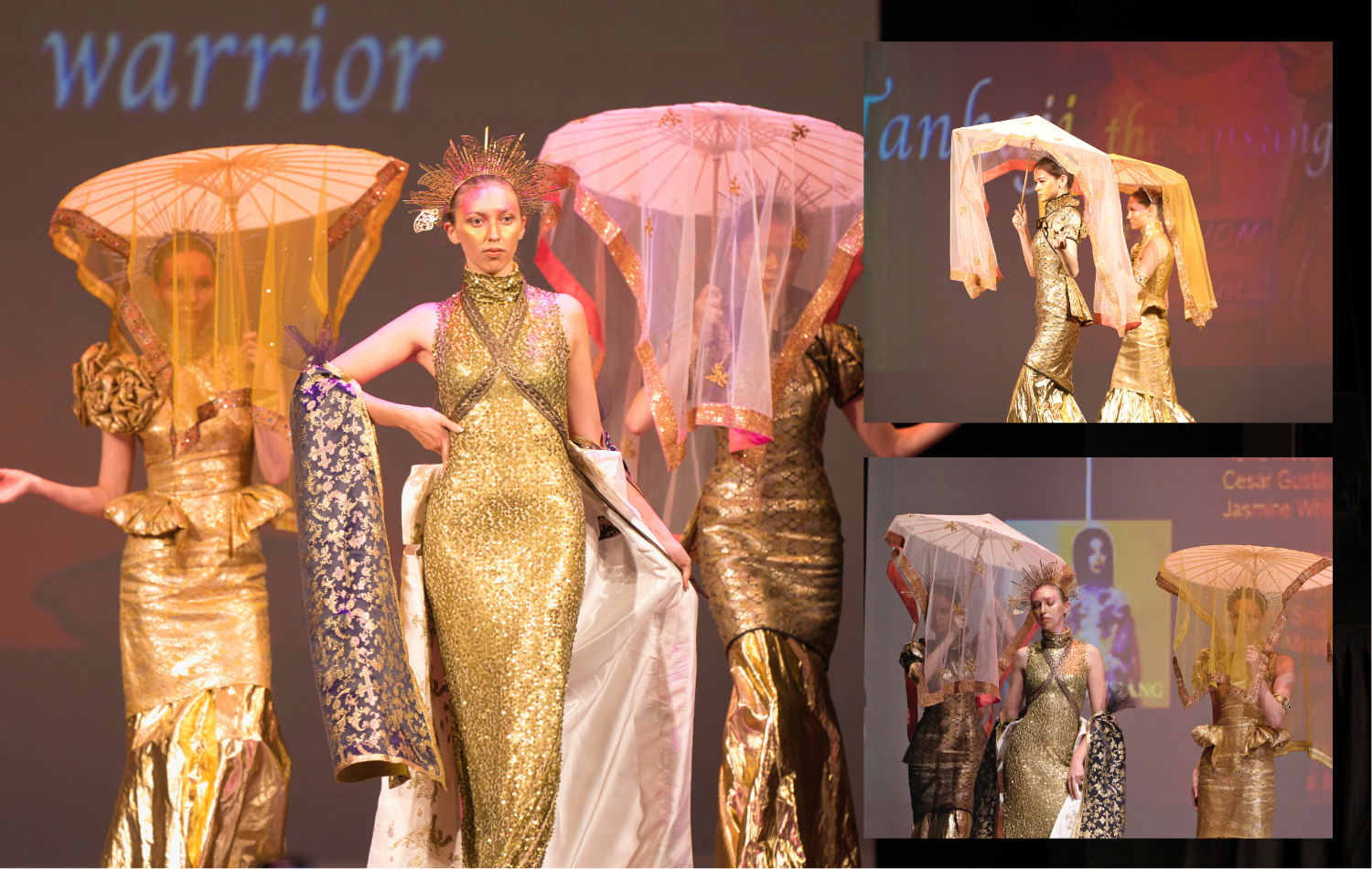
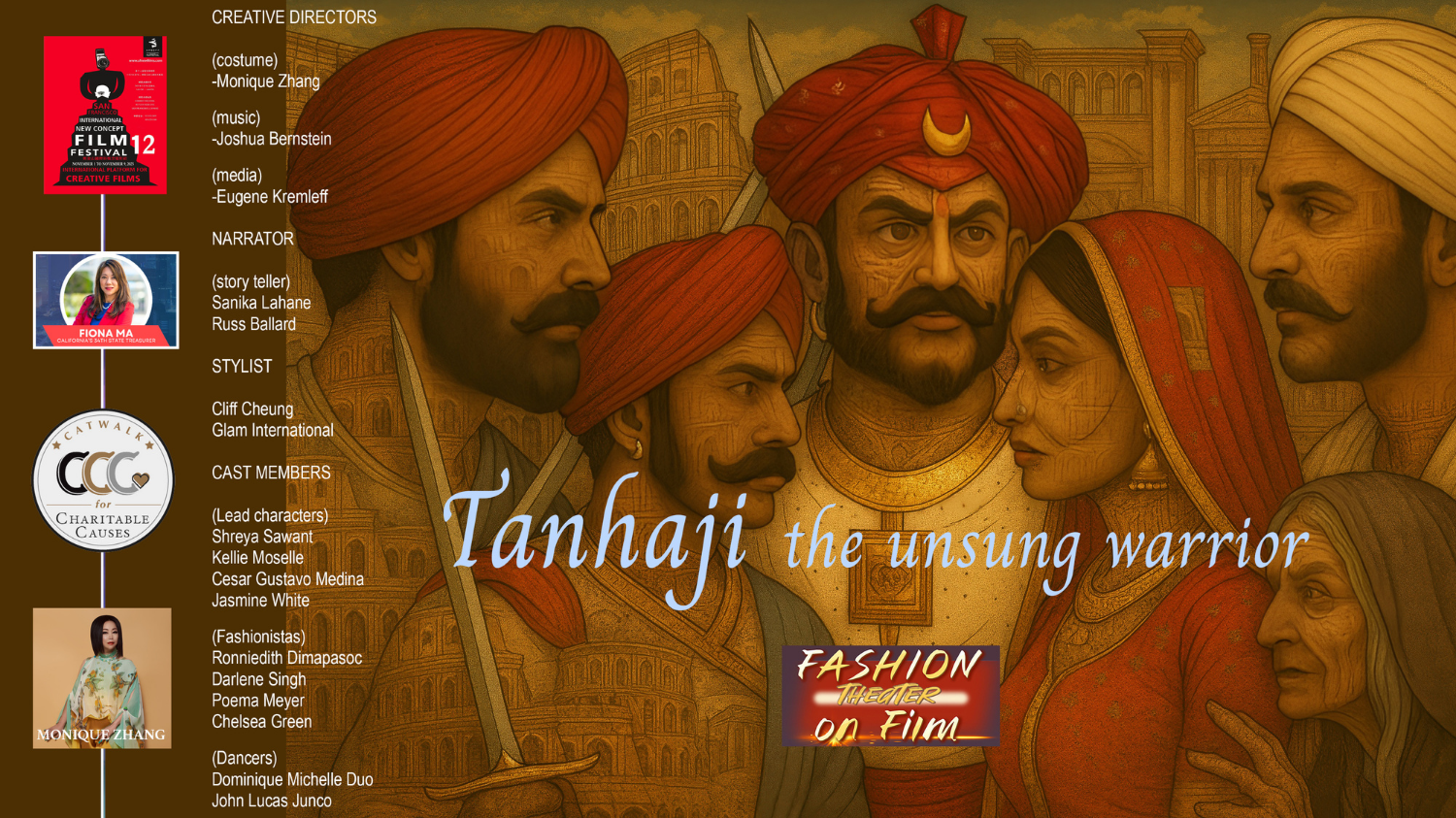
What made this production particularly fascinating was its unabashed embrace of anachronism. Modern athletic sneakers peeked out from under period costumes. The MCs, clad in coordinated gold kurtas and saris, wielded microphones like scepters. The projected title card—"Tanhaji the unsung warrior / FASHION on FILM"—made explicit what might have remained subtext: this was about the conversation between historical memory and contemporary spectacle, between cinema's mythmaking and fashion's perpetual present tense.
The Room Where It Happened: Artisans and Luminaries
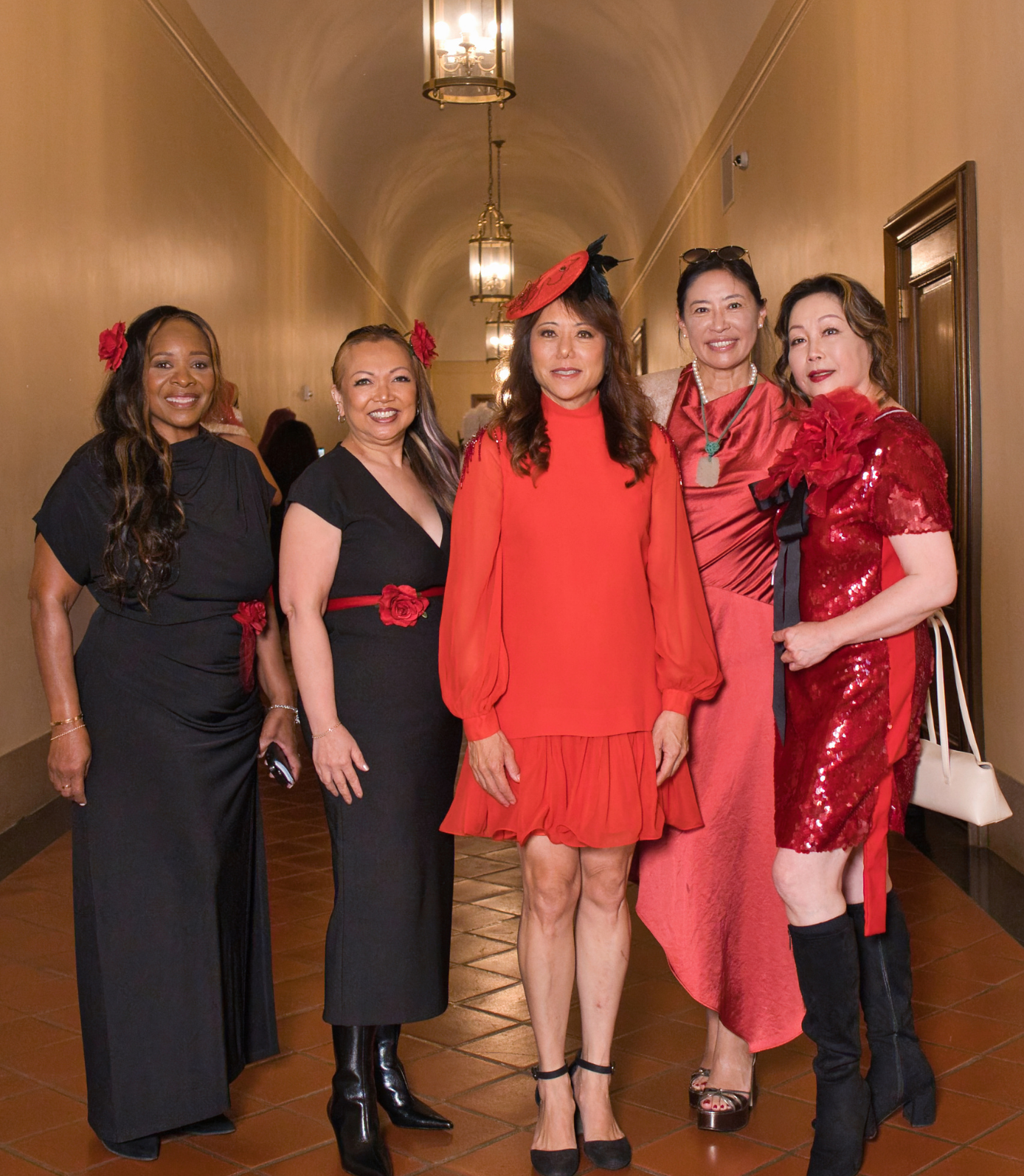
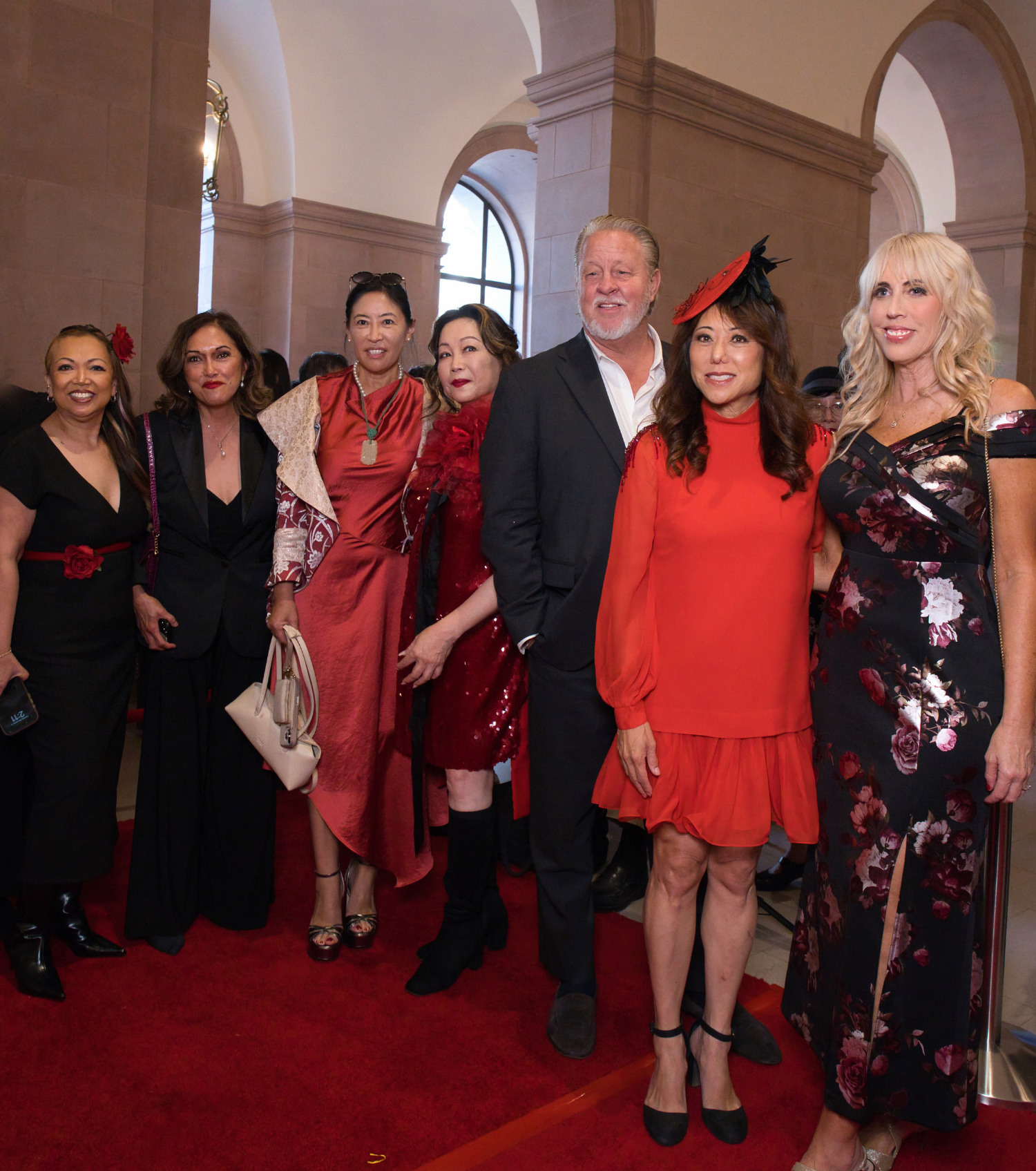
The evening's success, of course, required more than aerial prowess and historical ambition. Even before the house lights dimmed, the venue's arched corridors—lit by brass lantern fixtures that could have been lifted from a colonial-era hotel—became their own kind of stage. Here, in a telling photograph, the evening's power players assembled in a study of strategic color coordination: California State Treasurer Fiona Ma commanding attention in a coral-red ensemble complete with a sculptural fascinator, flanked by collaborators in black punctuated with crimson accents. It's the kind of image that speaks volumes about who understands the assignment when "charitable gala" meets "cultural spectacle."
Ma's presence lent the proceedings a certain governmental gravitas—her attendance a reminder that culture and politics have always shared more than passing interests, particularly when charitable causes enter the equation. That she chose to spend an evening watching Maratha warriors reimagined through the lens of contemporary performance art says something about the increasingly porous boundaries between Sacramento and the stage.
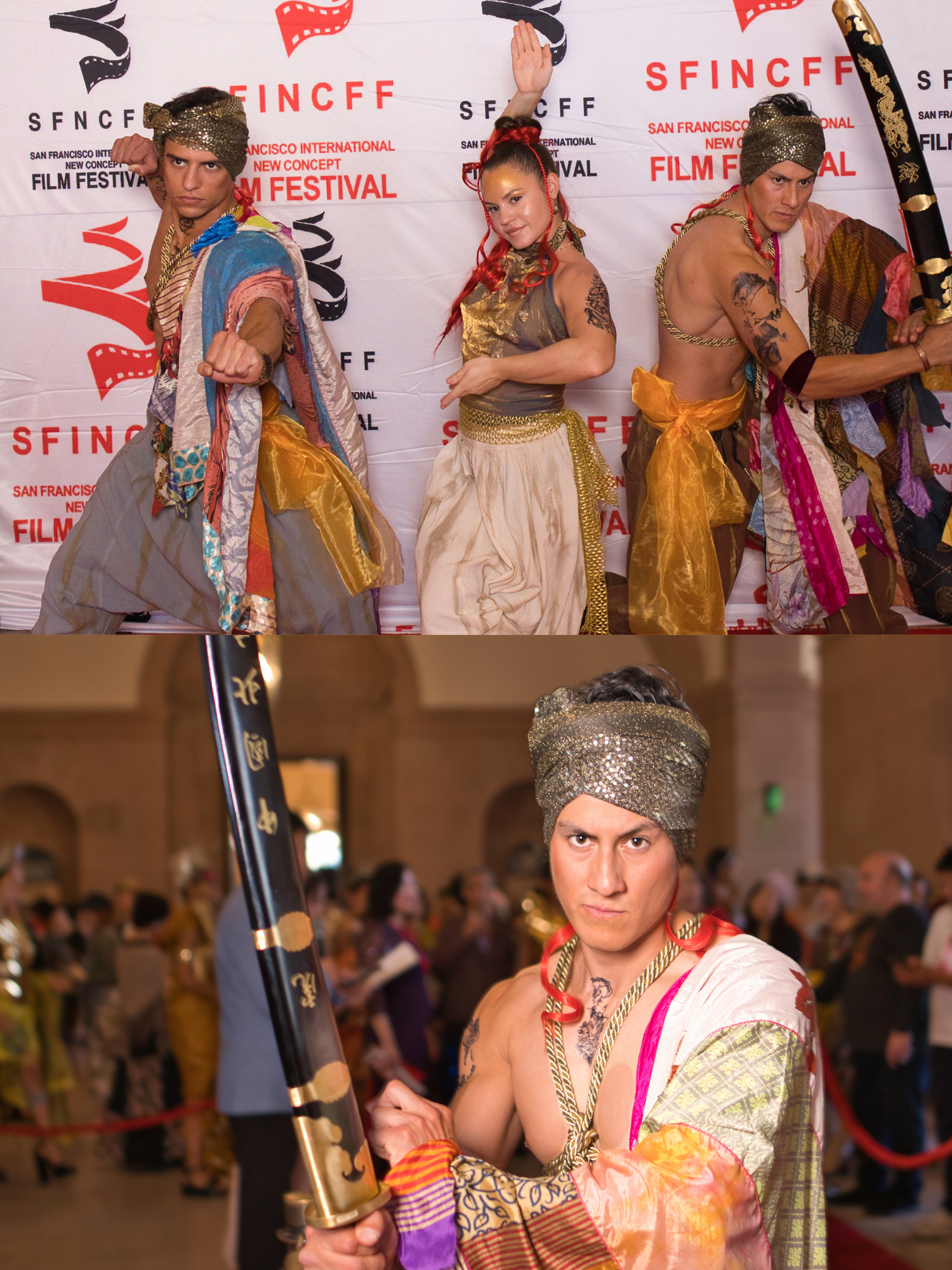
But the real stars, arguably, were those whose work made the transformation possible. Monique Zhang, the costume designer responsible for those architecturally ambitious lehengas and the warrior ensembles that managed to suggest both historical authenticity and gym-honed modernity, deserves particular recognition. To design costumes that can withstand backflips while maintaining their visual poetry is no small feat. Her pièce de résistance? A patchwork warrior's cape composed of what appeared to be dozens of vintage sari fragments—jewel-toned silks in navy, magenta, gold, and crimson, each square telling its own textile story while contributing to a larger narrative of cultural fusion. The wearer, turbaned in glittering gold and wielding an oversized ceremonial sword, looked like what might happen if Joseph's technicolor dreamcoat had been reimagined for a Maratha military campaign.
Then there's Ethel Reddy and her makeup team, the unsung engineers of facial transformation.
That gradient eyeshadow that read so beautifully from the orchestra seats? That required not just artistic vision but technical mastery of pigment, staying power, and the specific demands of stage lighting. Reddy's work showed an understanding that theatrical makeup isn't merely amplified everyday makeup—it's a separate discipline entirely, one that requires knowing exactly how much is too much, and then going slightly further.
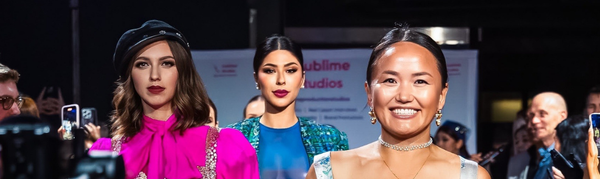
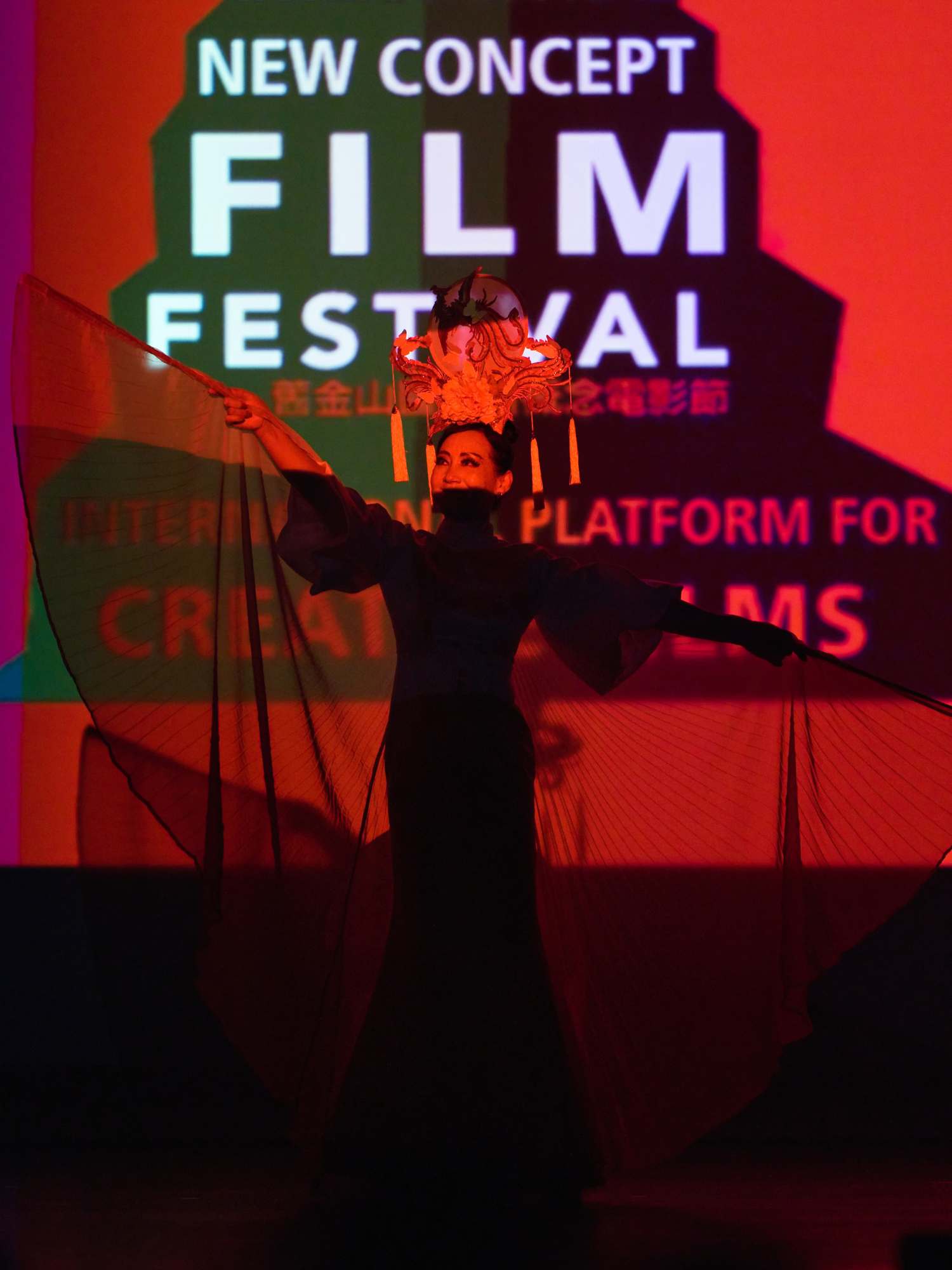
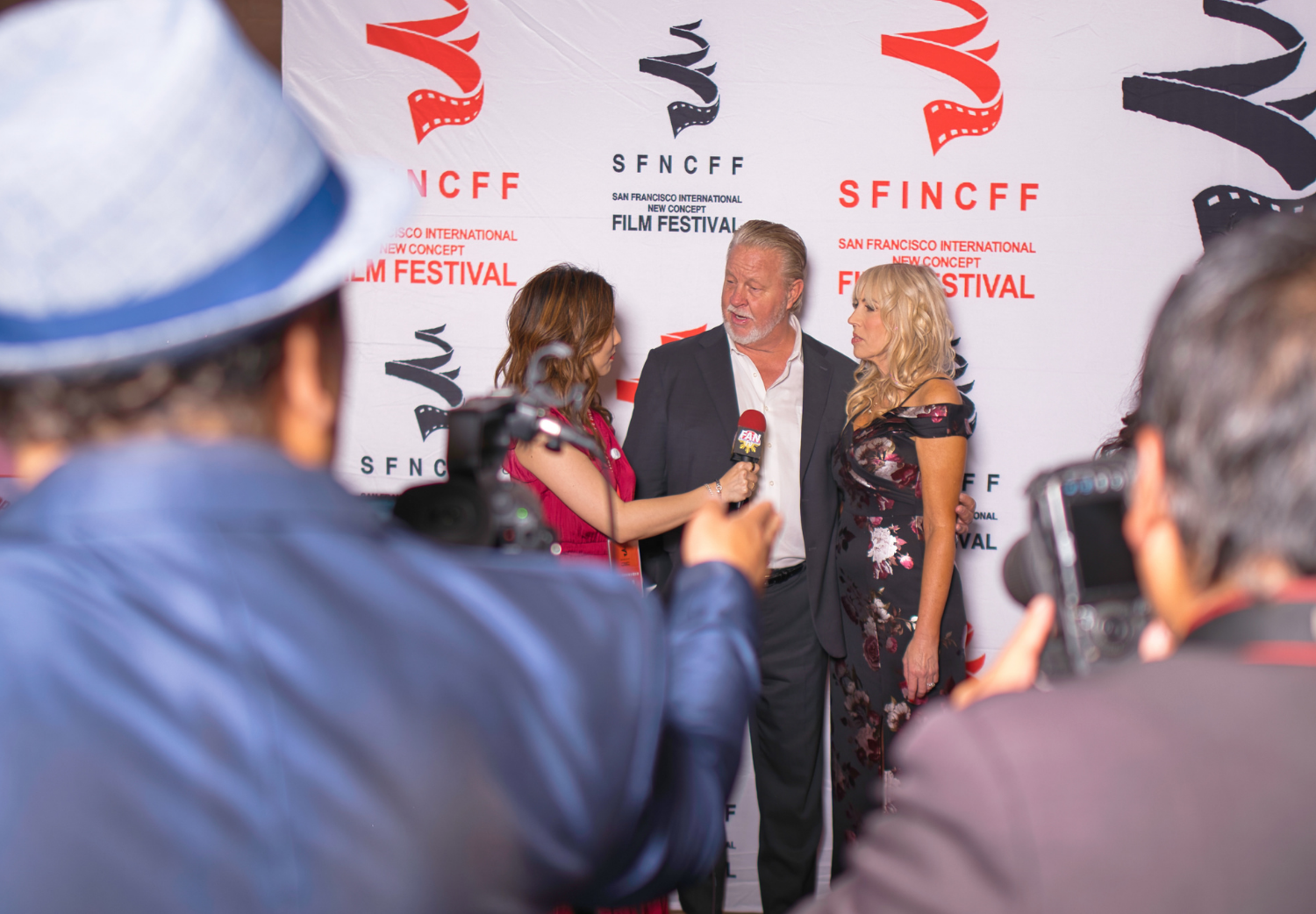
The red carpet arrivals provided their own theater. Against the repeating logos of the San Francisco International New Concept Film Festival, performers struck poses that blurred the line between documentation and performance art. Three warriors—their costumes a riot of metallics, flowing pants, and strategically placed draping—adopted martial stances with the self-aware irony of people who understand they're performing "warrior" for an audience that might otherwise be photographing tech entrepreneurs or film directors.
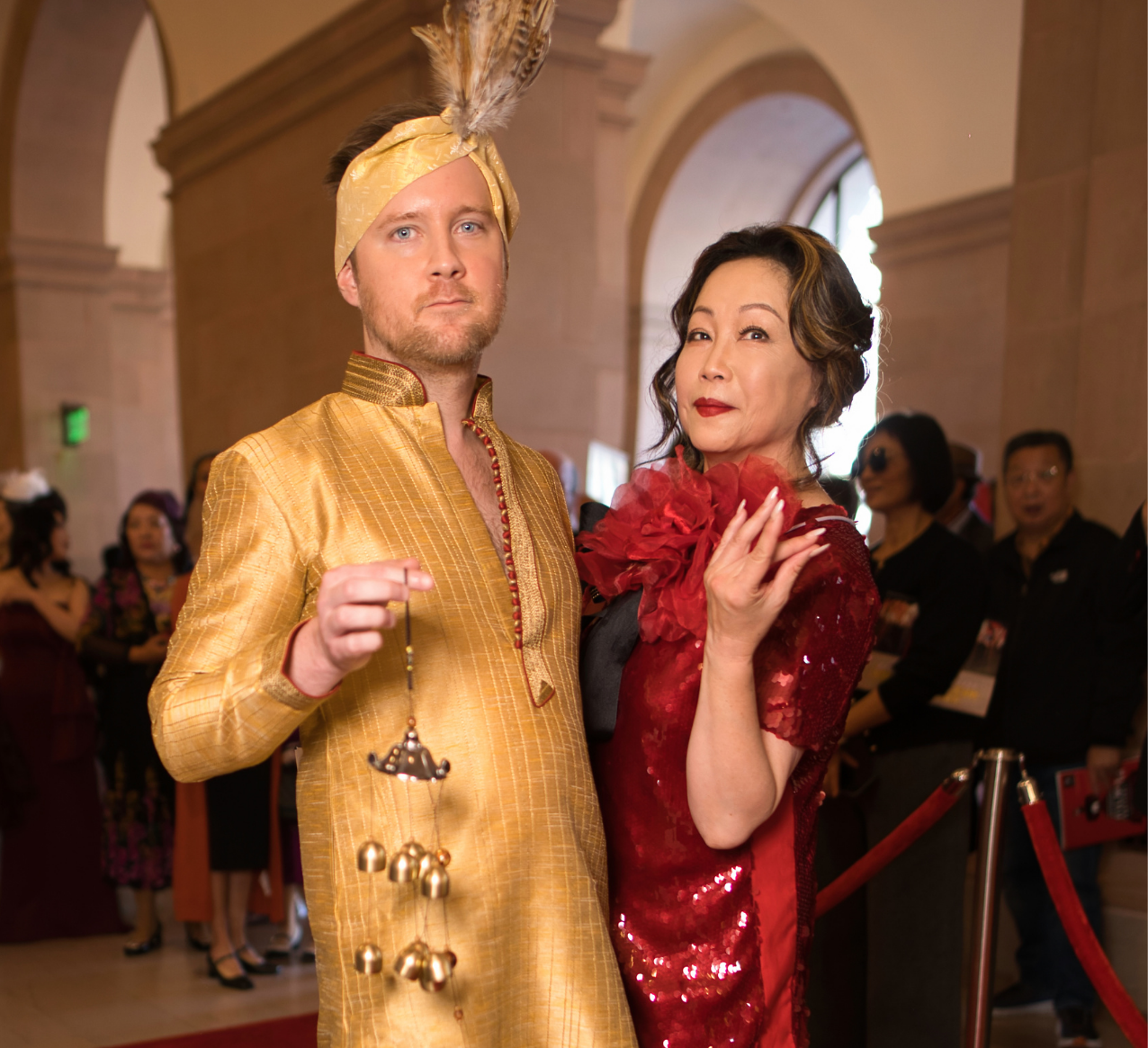
Among the civilian attendees, actors John Lacy and Rachel Bailit brought the particular appreciation that only fellow performers can offer. Lacy, game enough to don a golden silk kurta and yellow turban with peacock feather plume, posed with Bailit in her crimson sequined qipao—the two of them a study in what happens when performers commit fully to a theme without losing their sense of play. They understood, perhaps better than most, the hours of rehearsal required to make those synchronized flips appear spontaneous, the core strength necessary to hold those poses, the breath control needed to perform acrobatics while maintaining character.
The media scrum itself became part of the spectacle—photographers jostling for position as performers and VIPs cycled through their red carpet moments, the backdrop's bold graphics creating a visual frame that announced this was an Event, capital E. In our Instagram age, the documentation of the event has become nearly as important as the event itself, and everyone seemed fluent in this particular language.
The evening became, in its way, a meditation on collaboration—on what happens when a costume designer's vision meets a makeup artist's precision, when performers' physical abilities intersect with a director's conceptual ambitions, when governmental support enables artistic risk-taking, and when an audience sophisticated enough to appreciate craft shows up to bear witness. In our atomized cultural moment, there's something almost radical about a production that requires so many people working in concert toward a shared vision, however gloriously excessive that vision might be.
Coda
In our current moment, when cultural authenticity is endlessly debated and historical representation has become a minefield, there's something almost liberating about a production that simply commits to its own gorgeous excess. This wasn't a documentary. It wasn't even quite theater. It was fashion as storytelling, acrobatics as emotion, costume as architecture—a Catwalk for Charitable Causes benefit that understood the real cause was joy itself.
The Maratha warrior Tanaji Malusare died taking that fort in 1670. His commander, Shivaji Maharaj, reportedly said that while they won the fort, they lost the lion. This production suggested something else: that legends don't die; they simply change costumes, learn to fly, and find new stages on which to perform their immortality.